2026-09-08 - Advisory Committee on Homelessness
Summary
Built from the auto-generated video captions (full meeting, about 2 hours). No agenda or minutes were read. Captions contain errors and speaker labels are uncertain.
- The main item was discussion of three plans submitted by community members to inform the committee's work. See Homelessness Strategic Plan.
- One plan was a broad community framework covering many topic areas (family homelessness, outreach, warming centers, mental health and substance use, needle waste) rather than specific actions. No formal action was taken.
- A councilor attending presented a second plan built on a survey of cold-weather communities and service models, including a centralized 24/7 triage hub with warm handoffs and a walk-in location for people without phones. The committee response was generally supportive; no vote was held.
- The third plan, an implementation road map with housing and public health actions, was deferred to a future meeting for lack of time.
- Winter warming shelters: members urged making them lasting emergency infrastructure and discussed day versus night needs, mixed volunteer, church, state and city funding, and the annual cycle of operating November to April with planning and grant preparation through the summer and fall. See Winter Warming Shelter.
- Capacity figures mentioned: about 70 low-barrier shelter beds and about 40 recovery beds at the Bangor Area Homeless Shelter, and about 56 beds at another provider. No dollar amounts were approved.
- Crisis protocol discussion centered on gaps in step-down care after detox, warm handoffs, and emerging crisis receiving and mobile crisis services. See Homelessness Crisis Protocol Review.
- The committee agreed to put needle waste and harm reduction on a future agenda and asked the city for disposal-site data, costs and placement information.
- Next steps: members will send suggested outside stakeholders to the committee secretary, staff were asked to prepare a resource and gap map, and future topics may include involuntary commitment and proactively identifying suitable places for homeless services.
Agenda
Agenda not read; see Sources.
Sources
- Video: https://www.youtube.com/watch?v=dAZF3Ea0LDQ (City of Bangor YouTube channel, 1:59:09)
- Agenda Center: https://bangormaine.gov/AgendaCenter
Video
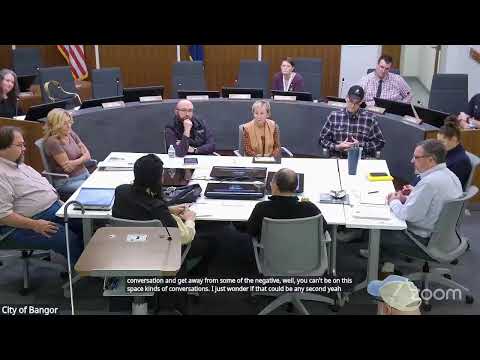
Transcript
*These are auto-generated captions; names and numbers may be misheard.
Transcript
01:39I lose.
01:40>> I lose this connection.
01:41>> Yeah.
01:42>> All right, it is 5:15. We're going to
01:44call to order this meeting of the
01:47Advisory Committee on Homelessness.
01:49Um, so today we do have a relatively
01:52short agenda
01:54from an items standpoint. However, the
01:58topics are going to probably take up
02:01quite a bit of our time, which is why we
02:02determined to leave this agenda a little
02:04bit lighter. So, our first agenda item
02:09is a discussion of the three plans that
02:11were submitted by community members.
02:16One by Sprague, one from Fish, and the
02:21Bangor Opportunity Plan, that one is
02:23Russell.
02:24>> Western Russell.
02:26>> So,
02:28with that, has everyone had a chance to
02:29review those plans?
02:34I will open it up for
02:36comments, thoughts, questions regarding
02:39these these three initial plans
02:40submitted by the public.
02:43>> Do we want to pick one and talk about
02:45it, and then pick another one and talk
02:47about it?
02:50Or do we want
02:50>> We we can. I mean, so when I was
02:52reviewing the three plans, it felt
02:55to me that they kind of were looking at
02:57it from different perspectives, right?
03:01Sprague's was really more of a
03:02community-wide strategic framework
03:05view on the issue, whereas
03:08Councilman Fish's was more like the
03:10organizational management piece of it,
03:15and then the Bangor Opportunity Plan
03:17being more of an implementation road map
03:19emphasizing the housing and public
03:21health and all of that. So, I don't know
03:23if it makes sense to start
03:25at the highest [clears throat] level in
03:27the plan that kind of covers that, and
03:28then work our way down through more
03:30operational.
03:31So, I guess that would be
03:38Sprague.
03:48>> Hello.
03:48>> Hi, I'm here.
03:49>> Oh, turning to Sprague's conversation, I
03:51really appreciate
03:52Mr. Sprague's
03:54attention down in the document and it
03:57obviously showed that there was a lot of
03:58activity in
03:592023 when he was a part of
04:02his activities and
04:03I appreciate the opportunity to have
04:05looked at it as the context of what's
04:07new now. That's kind of how I like when
04:10I had
04:11my review of this was what has been in
04:14place, what is new now and what are we
04:15looking at going forward.
04:17So
04:19how I
04:22My response to the whole thing is fine.
04:32>> Thoughts, comments?
04:39>> Well, I I
04:41felt like it was uh
04:43in the Roman numeral section
04:46So this is
04:47Ben Tree just for viewers at home. Like
04:50that we've had some concerns like who's
04:53speaking? I can't tell. So this is Ben
04:54Tree.
04:57Fair fair question.
04:59So I felt like this was
05:02like 25 conversations that could be had
05:06and so it doesn't direct anyone to do
05:08anything really. Like none of these are
05:10are actionable.
05:12And all those and it sounds like you
05:14could
05:15you could go in completely diametrically
05:17opposite directions and still be meeting
05:19that criteria.
05:21Each of the 25
05:24Roman numeral items
05:27The point is that the conversation needs
05:29to be had. So so he's pointing out the
05:31conversations, not pointing out like
05:32hey, you should do this, you should do
05:33this, you should do this.
05:35As opposed to Russell who's saying here
05:38are specific actions to take. That that
05:40was my main observation. There wasn't a
05:43conversation in there where it was like
05:44yeah, we shouldn't have that
05:45conversation.
05:47But playing five conversations is a lot
05:49to have. So, we probably do need to
05:51think about um
05:52any of those do we need to be involved
05:54[clears throat] with and how many are
05:56conversations somebody else can be
05:57taking the lead on.
05:58>> So, quickly, when did it actually come
06:00up the plan?
06:02>> Going from Sprig?
06:03>> Yeah, 2023, I think.
06:05>> So, do you remember the conversation
06:06that happened? I I just want I don't
06:07know the background. What happened when
06:09it came out in '23? What was the
06:11discussion and say, "Hey, you want to
06:13table this?" Or I don't know.
06:15>> I wish Counselor Sprig were here cuz I
06:18was not here
06:21in 2023. My understanding is that sort
06:23of as he was departing his time on
06:25council, he submitted the plan and that
06:28there was not much discussion
06:30>> Discussion to say
06:31>> at the time.
06:34>> And that was something he came up with
06:37on his own, was it the council charged
06:39him to
06:41>> It was something he did on his own.
06:43Yeah.
06:48>> I I think when I was reading it um
06:52and maybe I I don't know. I was not a
06:55good day or whatever, but it felt like
06:56it was very overwhelming for what we
06:58have to do.
07:00Uh because as I said, there's so many
07:01pieces that I could say I can make sense
07:03of except but I think it's I know
07:04reality-wise there's no way
07:06resource-wise I can make that work. So,
07:09um
07:10it's it's
07:12it's it's almost if let's say the same
07:14it's the same paper. You know, all these
07:16things. It's like you come up with these
07:17ideas, but the top three Christmas wish
07:19list is these three things. And then you
07:21work your way number two priority,
07:23number three kind of thing. And
07:25again, I didn't see that. So, again,
07:26it's up to us to figure out, but it just
07:28felt a little off of it.
07:33>> [clears throat]
07:34>> Yeah, what
07:38All right.
07:39>> And what you said kind of rings in my
07:41ears and I um
07:44you would said that they didn't the
07:46document didn't particularly produce any
07:49outcomes. They really just more of a
07:52view overview of the situations in in
07:55many areas.
07:56Um so what I did in my review was
07:59actually make a couple of things that I
08:01was I was compelled to in reading this
08:03document. Um
08:05because some of it rang true for me. Um
08:08I believe that the document talks about
08:10how fostering and and bolstering family
08:12homeless services in Bangor. That's one
08:15of the areas I would like to see
08:17um this committee really work on is
08:20um if we could say that Bangor has no
08:22homeless students, I I'd be pretty proud
08:24to put my name on it.
08:26And um I think it's something that we
08:27can do.
08:30Um
08:35It also talks about the outreach system
08:37as it was then and it really hasn't
08:38changed that much in the last 3 years.
08:40So bolstering outreach services in the
08:42Bangor area I think would be a good
08:45outcome.
08:46And um
08:48it talked about warming centers. They
08:50were just coming into play then and we
08:53have a few years of data on that. Um
08:56so one of the suggestions that I would
08:58make is making warming centers a
09:00permanent part of Maine's emergency
09:02infrastructure.
09:05And now it it's it's it's funded in
09:07through emergency services. The grant
09:09changes every year. The funds the funds
09:11are applied for yearly. There's no grant
09:15cycle involved. There's no guarantee
09:17that the funds would be there. Um and
09:19that's just the first concern around
09:21warming centers. So if we could focus on
09:23warming centers, I think every every day
09:25every time I come in
09:27>> Well, I think that actually was put in
09:28the
09:296-month plan we got in the
09:30>> Yeah.
09:31>> the plan and I could see this
09:33potentially
09:35addressing two things. One is obviously
09:36the homeless who need it. But you may
09:39also have a lot of angle residents
09:41totally whatever facing insecurity in
09:43terms of getting heat. They could also
09:45use it. So you almost can have a whole
09:47bunch of people
09:49and rather that we can help them than
09:51basically forcing someone home, you
09:53know, but
09:54elderly for example can't afford to say
09:56I got to give this up and I'll be home.
09:57So I think we can kind of, you know,
10:00multiple targets with that even the
10:02simple thing in the other six months.
10:04>> And when you say warming centers just to
10:05clarify do we need day warming centers,
10:08night warming centers, or both?
10:10>> Well, I think that's a conversation
10:12that's something we should probably put
10:13on the agenda as a standing item. And
10:16day and evening warming centers are uh
10:19um
10:21uh currently they're only they're
10:22weather related you know and they're
10:24they're they're temporary and so
10:26yeah, the conversation of extending that
10:28has been had.
10:35>> Although night is probably
10:37equally [clears throat]
10:37good but to night is when everyone stays
10:40home. So that's when they need it. Where
10:42in the daytime they could be busy
10:44running around for appointments and
10:45stuff so you don't need that as
10:47specifically.
10:48>> Um only if you're housed.
10:49>> If you're housed
10:50but even if you're not housed they they
10:52go to they used to go to appointments.
10:53So
10:54>> Which appointments?
10:54>> Like medical appointments.
10:57>> That
10:58I mean
10:59>> It's unfortunate.
11:00>> Limited and also a lot of our folks that
11:03are unhoused and
11:05the highest risk and often that usually
11:08needs the most visible are folks that
11:10have severe persistent mental illness
11:12and those folks struggle to get to
11:14appointments. So and
11:17that's only a small portion of maybe a
11:19day a week. So
11:22>> But having said that having made that
11:23point I want these warming centers just
11:25rather than just a place where you can
11:27sit down and stay warm. I think because
11:29it's intentional piece.
11:30>> And the ones that we have that's how we
11:32utilize them now, actually.
11:35>> Excuse me.
11:35>> But I I really did also think that what
11:39the point you made around folks that are
11:40vulnerably housed.
11:42Um, we see that even still in the
11:44summertime, folks get how they become
11:46wildly lonely and depressed and they
11:48access them during the day just for the
11:49socialization piece or for food or or
11:53warmth. So, I think there's great
11:55benefit.
11:55>> Yeah, I do worry this this winter
11:57especially with the fuel the way it is,
11:58more people will be at risk of this
12:00situation.
12:00>> Yeah.
12:02>> And I I think just on a point of
12:04clarification, I think maybe from an
12:06agenda point of view, these two things
12:07might be better off as separate
12:08conversations.
12:10Um, because the funding comes from
12:11different places and the expectations
12:14are slightly different.
12:16Um, it might actually be a better as a
12:19two agenda item understanding.
12:21>> I would agree with you.
12:22>> I would agree with you, actually.
12:23>> Yeah, so is is the funding for that
12:25state funding? Um,
12:27and so
12:30I agree this is important, but I'm not
12:33sure whether the state
12:35This is
12:36I'm trying to do the saying what who I
12:38who I am for the viewers at home. This
12:40is Ben Treuhaft.
12:42So,
12:44so I
12:45I I I don't know what impact we can have
12:48on
12:48if we're saying hey, the funding source
12:50ought to be stable, but then the funding
12:53source doesn't pay attention to us cuz
12:55they didn't
12:56bring about this commission. You know,
12:58is is one of them daytime is is like
13:01daytime funded through city channels and
13:04nighttime through the
13:06state or like are they both state or
13:11Yeah,
13:11>> [clears throat]
13:12>> I would presume
13:13>> Bruce, do you know the answer to that
13:15question? Um, does I know that
13:19nighttime warming shelters are funded
13:20through the state. Is the well funded
13:22through the state as well? I didn't
13:24think so.
13:24>> Volunteer, which just had that gentleman
13:26that ran the 100 miles. It just raised
13:29$17,000 for for them.
13:32Um all their stuff is through their
13:34church contacts and through
13:37pretty much that. That's it. Volunteers
13:39and stuff like that.
13:41>> And I know some of the day warming
13:44centers had a flood or some city funded
13:47support, right? And that was in a
13:49one-off like didn't break out some
13:51last year. Shut some funding.
13:54>> That was for the overnight.
13:56>> Okay. That was for warming.
13:57>> Yeah.
13:58>> But that came from city or opioid
14:00settlement or
14:00>> I don't know what where that fund came
14:03from.
14:03>> So we got a one-time general assistance
14:07payment that didn't have a lot of
14:09strings attached to how we used it and
14:11we used that to fund the warming
14:12centers.
14:14>> I guess my my point is gosh, it does
14:17seem to come from a lot of sources.
14:19Saying this ought to be permanent. Um
14:23it sounds like there could be a pretty
14:25significant price tag associated with
14:26that. So I I just I'm just putting that
14:29out there that especially if a lot of
14:31the funding or some of the funding is is
14:33from the state government. Um
14:35that makes it even
14:37harder cuz
14:38it's not funding that we actually have
14:40any control over or recommendation to.
14:42Yeah.
14:43>> No, but we could possibly help
14:46identify what those sources are cuz I
14:48would presume that there are a lot of
14:50grants out there not just from the state
14:52but from public foundations, private
14:53foundations. And
14:56>> [clears throat]
14:56>> making sure that the organizations that
14:58are operating these facilities
15:00know where those funds are. That could
15:03be a recommendation that we could make
15:04forward is
15:06is is there a resource for these folks
15:08centrally located that shows where where
15:10fund city or otherwise are available to
15:13help them be able to
15:15underwrite these things that we all
15:16agree are needed, but we also all
15:19understand come with the price tag and
15:20the city cannot just put a bill on an
15:23unlimited bill.
15:26>> A good point. Like we can't tell the
15:27state, "Hey, give us more." Like
15:29>> We can.
15:30>> We can.
15:32>> We can ask for anything we want.
15:34>> So, we should be able to say to the
15:36state,
15:37um with this funding should come some
15:38standards, you know, uh citywide
15:41standards, uh
15:42staffing ratios, um training levels,
15:46you know, something like that. Um I
15:47think that there's an opportunity to
15:50to in increase the
15:53the service tenfold with um
15:55a little bit of a little bit of um
16:00a little bit of preparation planning on
16:01this from this group, I think we could
16:02help a lot. Um
16:05in in in in in what they're doing and
16:07what their mission is every every year.
16:09Um
16:10you'll notice that
16:11warming centers specifically have
16:13cycles,
16:14and those cycles run about 3 months.
16:17Um the open cycle runs from November
16:20through April, but then there's the
16:22closed and planning cycle that's April
16:24through August, and then there's the the
16:27grant funding and and preparation that's
16:30August through November, and then
16:31there's again a second cycle of November
16:33through April being service provision.
16:36So, we're constantly cycling through
16:38this
16:39through this with all with with warming
16:41centers. What What part of the cycle are
16:43we in right now? People are looking at
16:45finishing up, spiffing up their grants,
16:47getting their applications in
16:49um
16:50>> [clears throat]
16:50>> right before right before they're
16:53viewed, which is the deadline is fairly
16:55soon.
16:56>> Yeah, we meet we we meet all through the
16:58summer, all the warming centers, and um
17:02Jen Lawler, who is the top coordinator,
17:04so we meet every month, you know, what
17:07do we need to do this month, and we're
17:09always getting prepared for the winter,
17:12you know, wintertime. So,
17:14we're pretty much on top of it.
17:16>> We meet with the board of the final
17:17lines for everyone's grant applications.
17:20So.
17:22>> And the grants are through the continuum
17:24of care, right? The
17:26main housing and the continuum of care
17:28sets the standards for those.
17:30Um
17:32there's a letter that comes in on the
17:34city has to support a letter. What I've
17:37always wondered what was in the letter.
17:38Does it just say that it's an occupancy
17:40or is there are there other other other
17:43things besides occupancy that
17:45>> That's just a letter of support, right?
17:48It lists, you know,
17:50what they've done in the years past, you
17:52know, how they support our unhoused.
17:55So, it's all set. Yeah.
17:57>> Thank you.
17:58>> So, we're talking about potential
17:59funding sources for for warming centers
18:01or what is if I can get caught up a
18:03little bit.
18:04>> Yeah, not particularly. We we're we're
18:05starting
18:07kind of the conversation with the
18:09Sprague plan and then it kind of morphed
18:12into a little bit of a
18:15you know, where where are the the
18:16commonalities between these plans and
18:18the need to warming centers came up. So,
18:21we've kind of gone a little bit of a
18:22tangent, but I think a worthwhile one
18:25to have this conversation. It helps us
18:27also
18:29wrap our heads around
18:30what we can and can't recommend or what
18:33we should and shouldn't recommend. I
18:35mean, kind of where our parameters are
18:37when it comes to looking at these things
18:38holistically.
18:41>> So, not specifically to funding sources,
18:43more generalized like
18:45>> Right.
18:47I mean, just to weigh in on
18:49the
18:50the matter of budgetary issues like
18:53that is really where I did the bulk of
18:55my
18:56experience was at a
18:59um
19:00Bangor is probably second most
19:02high volume
19:04warming center.
19:05And you know, what I can say is, you
19:08know, we did a pretty amazing job
19:12uh with what we but we were woefully
19:14underfunded.
19:16Um and the
19:18fiscal issues contributed to the quality
19:22of what we were able to deliver. And I
19:24think that, you know, if we could
19:25improve that quality, not only would,
19:27you know, it mean
19:29more lives saved and more lives
19:30rehabilitated because these people are
19:32more willing
19:33to take advantages of sort of to take
19:35advantage of services when they're happy
19:37and they're comfortable and they feel at
19:39peace
19:40um in their community, but it
19:43means that we could offset
19:46um some of the city's other costs um in
19:49dealing with like a full acute
19:50expression of homelessness
19:52by
19:53um putting these people in community
19:56with the provisioners of their care
19:59that they're going to be seeing anyways.
20:00I mean, a lot of people that volunteer
20:02and staff our warming center were people
20:04who were doing street outreach. They
20:05were They were street pastors. They were
20:08pastors of local ministries. They
20:10were recovery professionals. They were
20:12recovery coaches. They were in Narcan
20:14trainings, you know, so it's like
20:18I think that um
20:20you know, ultimately the squeaky wheel
20:22gets the grease.
20:24Um and I think what most people agree
20:26when they look at Bangor is that in
20:28terms of the unhoused
20:30crisis, we're a very, very squeaky
20:31wheel. So, why why dress ourselves up
20:33and say, you know, like let's put a nice
20:35price on this. There's not a nice price
20:37to be had
20:38here.
20:39You know, it's
20:41like
20:42this is going to take a pretty creative
20:45cut wherever we we draw it from
20:48to to create change. You know, like
20:51we're not going to just In my opinion,
20:52we're not going to be able to shuffle
20:54what we currently have
20:55and merely rearranging the pieces is
20:58going to create a We need an infusion
21:01of new resources and outlets to
21:05address the deficit that already exists
21:07there. You know.
21:09At least that would be my thought.
21:10>> Um
21:11>> [clears throat]
21:11>> So, if we think of uh
21:15Council uh former Council member
21:16Sprague's uh
21:19document as having 25 conversations to
21:21be had and Jay started us with a couple
21:23of them that uh the warming centers and
21:26the goal of every child having a home in
21:28Bangor.
21:30Uh
21:31another one that I think relates to some
21:33of the feedback that we got this week is
21:35uh number 10, uh work with
21:37organizations.
21:38Um I'll just leave out the names of the
21:40organizations, uh but to develop uh
21:43strategies to mitigate needle waste. And
21:45and I know there's work being done
21:47around that and and there's numerous
21:49organizations that are involved in
21:51various ways. Uh but I I think that I
21:54think that relates um to to some of the
21:57messages that we got um
21:59about I
22:01something that's a a concern for people,
22:03a problem for people. Uh certainly
22:06um
22:07that that could be something that we
22:08have as like a I don't know if that's a
22:10regular agenda item necessarily, but
22:13something that we could identify as
22:16a thing that has to be part of any plan
22:17that we come up with as is
22:20reinforcing
22:21needle exchanges and needle waste as as
22:25a part of that conversation that we need
22:27to have.
22:28>> And I think also that is
22:32something I hear about from our folks
22:34that are unhoused as well, that they
22:35feel strongly about needle waste as
22:39well. And the majority of our folks want
22:42to be able to either have a part in
22:45solving that problem.
22:46Um
22:47or have an easier way of
22:50disposing needles. So, and that I think
22:54concern is not just from our house
22:56community or unhoused community as well.
23:00>> Yes, I thought of that and that's what
23:02I'm hearing is more boxes and more
23:04needle boxes.
23:06>> Can I help clean up? I get that a lot.
23:08Is there a way for us to help, too?
23:11>> It's obviously not everyone, but there's
23:13there's a surprise. I think it was a
23:15surprise.
23:17It'll smile.
23:18That's what it is.
23:22>> Do you think your blood or generally I
23:23know a lot of house people litter,
23:26right? [clears throat] You know,
23:27and all the most house people don't like
23:29litter, right?
23:32>> This is truly not different.
23:35>> Yeah. Yeah. Yeah.
23:38>> A lot clean.
23:41>> I've seen on social media that a lot of
23:42the unhoused are organizing and handling
23:45needles and
23:45>> Yeah. I've been prescribing a lot of
23:48post-exposure prophylaxis to folks that
23:50are trying to do well in their community
23:52and have had accidental needle sticks
23:54themselves.
23:55And because of the HIV outbreak are
23:57coming and asking for treatment after a
23:59needle stick. And this is folks that are
24:01housed, this is folks that are unhoused,
24:04um but feeling very strongly that they
24:05want to help clean up their community.
24:08>> Do we need words of wisdom on
24:12you know, like a public service on how
24:14to have to handle needles?
24:16>> Mhm.
24:17You know, no one else
24:19>> Can you say that a little louder?
24:20>> Oh, sorry. Um
24:22No, I have a public service on how to
24:23handle needles.
24:25You know, some people, you know, even
24:26the ones who want to pick it up, they
24:28just have no clue what to do.
24:30>> And
24:32we learned I think first were you
24:33involved in this when we were trying to
24:35figure out there are guidelines on
24:38certain websites that
24:40are different. Do you want to speak to
24:43that a little bit?
24:43>> the trash.
24:44>> Uh-huh.
24:45>> Yeah.
24:46>> [laughter]
24:47>> I really don't want to talk.
24:49Yeah, but I mean I think so the
24:51>> Conflicting guide
24:51>> There's conflicting guidance out there
24:53about what to do with
24:55needle waste and whether it can go in
24:57the trash, but for purposes of Bangor's
25:00waste stream,
25:02the typical guidance is to put the
25:04needles in like a used laundry detergent
25:07jug, and that is not good for us because
25:10of how our trash gets processed through
25:12our particular waste center. And it
25:15essentially creates projectiles
25:17that are very dangerous. So,
25:20so yeah, we have I mean, particularly in
25:22the city, we have a real challenge with
25:24properly disposing of the needles.
25:26>> So, what is how how is that challenge
25:29communicated to the public? Right. How
25:31is it done?
25:32>> Yeah,
25:33I I know
25:34some amount has been done, Bruce, but I
25:36don't know the details of what has been
25:39communicated.
25:40>> I don't know how it's been communicated,
25:41but I I do know that
25:43we have
25:44areas where we can they have all the
25:46count, right? That they can put their
25:48needles in. It's just people aren't
25:50using them.
25:51>> And and, you know, even like having been
25:54a primary care provider, it was not
25:56uncommon guidance for us to say, "Your
25:58diabetic needles, if you don't have a
25:59sharps container to put them in an empty
26:01laundry container or, you know, laundry
26:03detergent bin, and then you can throw
26:05that away." So, this also is helpful for
26:08anyone that's disposing needles, whether
26:10it's for illicit use or for private use.
26:12>> And honestly, when I in campsites, and I
26:15don't know about you, Amy, and a lot of
26:17these needles haven't even been used.
26:18They're they're they're
26:21They open a package, they use a needle,
26:23and the rest of the needles are just
26:25left on the ground. And so, I mean,
26:27that's what we're seeing when you see
26:29you go into a campsite, you see, you
26:31know, 30, 40, 50 needles we're seeing.
26:35Probably needles that have never even
26:36been used.
26:38>> So,
26:38>> Right now, we in the planning department
26:42are exploring
26:44the response by Casella and their recent
26:46pilot in the state of Vermont to work
26:48with a needle manufacturer to learn how
26:51to recycle those.
26:53Cuz if you layer the EPA and the
26:55recycling aspect on disposal,
26:59there there could be some
27:01work to be done there with getting
27:03someone to actually dispose of
27:06at medical facilities, but then also in
27:08the general waste.
27:11>> Um I was going to say, so what does this
27:13waste management facility um
27:16prefer? I mean, what would they be
27:18capable of handling? Because shouldn't
27:19we, you know, sort of
27:21work from the top down if if that in
27:23terms of our message, you know,
27:25especially if there's already
27:26conflicting guidance, shouldn't we just
27:27go with the pinpoint where where the
27:29where the bottleneck is? And I mean, is
27:31there something that they
27:34think could be used to dispose of them?
27:36That won't create projectile.
27:38>> I presume sharps boxes.
27:39>> Yeah, I I they don't want they don't
27:41want needles, period. I think this the
27:43sort of the end result. Um and I think
27:45probably
27:47I Am I correct, Bruce, that really and
27:50Gunnerman is the one who's paid the most
27:52attention to this issue? So, this is a
27:54topic that we want to dig into at a
27:56future agenda. I think Jen, perhaps with
28:00our public works director, would be the
28:02right folks to sit down and talk to you
28:04in detail and answer questions.
28:07>> Sounds like it's worth adding on to the
28:09list of priorities.
28:11>> I would agree and given the plethora of
28:15messages that we've received regarding
28:18the topic, I think it probably is one
28:19that warrants prioritization. So,
28:22>> Do you know is Jen
28:24going to be available for that meeting?
28:25>> She will be at your next meeting, yes.
28:27>> I thought so, but I just wanted to
28:28double-check. So, if we can add that to
28:31the agenda for the next meeting if
28:32everyone on the committee is okay with
28:34that, and then we can go with deeper
28:36conversation because it certainly sounds
28:38like this is a conversation that needs
28:40to be had. It also sounds like one that
28:41we might be able to provide
28:42recommendations relatively quickly to
28:45council on things that they can do to
28:47help.
28:48>> Is there
28:49Is there data on the sort of needle city
28:53exchange, whatever it is that we can
28:55have before the meeting?
28:57>> Yeah, there should be because the city
28:59Well, I'll say if the city has a
29:01contract with Wabanaki for the needle
29:03pickup and disposal, then we do have
29:05good data about anything that goes
29:08through Wabanaki,
29:10um which I think would be helpful to
29:11you. So, I can have that information to
29:13you.
29:13>> Something to give us a map or
29:15>> Brittany's hands up. I don't know if she
29:17has something for you.
29:18>> Brittany,
29:18sorry.
29:20>> Don't be. I'm sorry that I needed to be
29:22remote today. Um is there a Is there a
29:26map of
29:27um
29:28disposal locations for the city, like
29:31including where there are boxes across
29:33the city?
29:36Bruce, do you know?
29:38Isn't there one on our website? Sorry.
29:39>> I'm sorry. I I should have
29:41said that again.
29:42>> Um uh is Doesn't our website have a map
29:44of all the needle disposal locations?
29:47>> Yeah.
29:48>> Including the boxes across the city,
29:50just like
29:54I believe so, but Bruce and I are both
29:57waffling as we look at each other across
29:59the room. No, that's [laughter] okay.
30:01All right. [clears throat]
30:02>> It is on the city site, yeah.
30:03>> Do we have a rough estimate of what the
30:05total number of
30:07>> Yeah.
30:07>> drop sites are? I was searching
30:09>> It was what you were talking about.
30:10>> Yeah.
30:11>> 1 2 3 4 5 6 7
30:15>> That doesn't
30:16That doesn't sound like an abundance to
30:17me.
30:18>> to say that doesn't Yeah.
30:20>> Go ahead, Brittany. I'm sorry.
30:22>> Yeah, I mean, I was just I can take a
30:23look at the website while I'm sitting
30:26here, too. I was just thinking
30:27similarly, um that it it's really
30:30interesting to hear about the waste
30:33management stuff because that is such
30:35like widely shared information amongst
30:37syringe exchanges and other folks, too.
30:40And like there are some syringe
30:42exchanges that are giving out laundry
30:44detergent bottles or other things so
30:46that um
30:47so that things can be disposed of
30:50properly and I'm sure that there are
30:51many of our community members that are
30:53like spreading that information and then
30:55to hear that that's sort of counter to
30:57what we want to be happening I think is
30:59also a problem.
31:02So, thanks for raising that.
31:05>> And a great thing to communicate to the
31:08public.
31:09And to keep that important.
31:11>> Yeah, for sure.
31:14>> Awesome. So, we will make sure that is
31:15on the agenda for the next meeting if
31:18city staff can just have that
31:19information from Anarchy
31:21the exact number of
31:24disposal sites that we have.
31:26>> And the cost associated.
31:28I'm curious about that. City ones.
31:34>> I'm sorry.
31:35>> The city has three locations on its
31:37website.
31:38>> Okay, but I don't have the other four.
31:40Okay.
31:41Well, we'll talk about it right now
31:42we're here.
31:43So, so so if we could just compile all
31:45that information for the next meeting
31:47and then I think
31:48>> And the cost.
31:49>> You had a great point there the cost of
31:51operating those not just to install but
31:55somebody has to
31:56maintain that.
31:58That would be
31:58>> And also also I don't know if they have
32:01I guess a factor is like how how full
32:03are they?
32:05Um because like
32:07I know I know I know I know I know I
32:07know but the thing is I'm really curious
32:09because like how often
32:10you want to get rid of it and maybe you
32:12know clean up things like that because
32:14seven may not be enough. I mean I'm just
32:16saying
32:17>> I mean it doesn't sound like enough just
32:18throwing up a
32:19>> I mean if there's one that's like you
32:21know very low volume then obviously
32:23we'll place maybe without one there. I
32:24was just I was just don't know.
32:26>> What what I hear from folks who are
32:28unhoused and
32:29you know, I think everyone knows that
32:31that I like to be a bit of a problem is
32:33that like
32:35people don't really have a passion for
32:36creating needle waste, but they can't
32:39seem to find the needle boxes. They
32:40don't seem to be in the area where the
32:43use is. Um and so the people are having
32:47to uproot
32:49their schedule in one way or another um
32:52to get there or at least it wasn't, you
32:54know, communicated uh as we've said
32:57fully um although it's somewhat the
32:58needle waste probably needs to be like
33:00towards garbage cans.
33:02Because seriously, how otherwise have
33:03you seen a location? That means I have
33:05Someone has to hold on to the needle
33:06until they get to that spot.
33:08>> Yeah.
33:09>> And throw it out.
33:09>> I think all of these are great points,
33:11but if we're going to put this on the
33:12agenda for next week, like I let's carry
33:15this conversation next week and move
33:16forward with the conversation maybe for
33:18today.
33:18>> Two weeks nothing.
33:19>> Or two weeks. Sorry. Sorry. So many of
33:21these things I forget with.
33:24>> I'd like to move like to make an actual
33:26motion uh that we put winter um
33:30winter warming centers as an agenda
33:32item, a standing agenda item on our
33:35>> I think that's
33:36a good suggestion.
33:37>> Is there something specific related to
33:40winter warming centers that we want to
33:43to tackle or is it a very general
33:45>> I think it's a very
33:46general In my thinking, it's a very
33:48general
33:49um agenda item that something is almost
33:53always going on with a warming center,
33:54whether it's the middle of summer or if
33:56it's the middle of winter.
33:57>> preparation phase there and planning
33:59phase.
34:00>> Just giving the opportunity for us to
34:02pay some some quick attention each time
34:05uh
34:06what's going on at the warming centers,
34:08where are they in their planning and
34:10preparation,
34:11uh are they
34:12and how how can the city support that?
34:15Um
34:16would be
34:17just a
34:18a quick check-in. Each time.
34:21Even every other.
34:23>> Yeah, I'll second that motion.
34:26>> All right. We got We have a motion to
34:28put
34:29warming centers as a standing item on
34:31the Is that something you want me to
34:32give an update on
34:34>> That will be something. Yeah.
34:38>> Yeah.
34:39>> Okay.
34:45>> Yeah. I think we're good. We'll just
34:47We'll just make sure it's on there and
34:48we'll we'll get that out to you and then
34:50>> the
34:51>> Okay.
34:53We'll make it easy.
34:55All right. Anything else with regard to
34:58the spring for mobile and I know we went
35:00a little bit
35:02by by there but
35:04It'll be a good topic for the next
35:25>> You know,
35:26Mr. Spring identified mental health and
35:29substance abuse as an important part of
35:31a homeless response.
35:36It's just something we've got to
35:37continually continually look at and what
35:39are our what are our our mental health
35:41and substance abuse providers doing
35:43around homelessness?
35:54proved to me.
35:57>> And I also think that's something that
35:59when we're talking about communicating
36:00what work is being done to the public,
36:03talking about what services are being
36:05provided because I do think that there's
36:08Again, this was 2023 but I had already
36:11been doing street medicine for 3 years
36:13when this came out and it's kind of
36:15I don't think people are aware of the
36:17amount of medical outreach that gets
36:19done particularly with mental health and
36:21substance use disorder services. Like I
36:23got most folks don't know there's a
36:24psychiatrist that can do our have a
36:26street medicine team.
36:28Um
36:29And also, what work is being done and
36:31then if there's questions about what
36:33that means for clients and how we can
36:36get folks to engage because just because
36:38there's a psychiatrist on the team
36:39doesn't mean
36:40everyone gets
36:42wants to engage in mental health
36:44support. But, I think that could be
36:46something that could be communicated and
36:48how does the city support organizations
36:51that are doing that work because it is a
36:54very specialized type of medicine that
36:56people
36:58there's
37:00it's it really truly is a specialty
37:02level of medicine that you do need extra
37:04training to do and do properly with a
37:06lot of support in a way that's different
37:09than a traditional medical office. So,
37:11there are things, in my opinion, that
37:13could be done to support the
37:14organizations that are doing work or
37:17provide education for organizations that
37:19are interested in doing the work so that
37:22harm isn't done to the population cuz
37:24similarly, I'm not going into the
37:25hospital to do open heart surgery. I've
37:27never been trained to do that. I
37:29wouldn't want someone that has no idea
37:30what they're doing with street medicine
37:32thinking that they're going to come out
37:33and save the world. There could be
37:34incredible harm to be done to the
37:35population cuz they're quite vulnerable.
37:37>> I think in terms of medical and health
37:40and substance abuse,
37:42I think we need to figure out where the
37:44pain points are
37:46that you can quickly get
37:48resources there. I mean, street is one
37:50thing.
37:51Emergency room is another one. I mean,
37:53we are dealing with like half the time
37:54people are coming in and then everyone
37:55places to go and then you're stuck. We
37:57try to find places but we have no places
37:59to take them. So, I so I send them to so
38:01huh?
38:02>> Yeah. Can I talk to you?
38:03>> Yeah, yeah.
38:04>> Um
38:06So, you know, we were talking shoo
38:09uh in earlier sessions about creating
38:11sort of
38:12like
38:12webs of, you know, going through the the
38:15ecosystem of various resources, you
38:18know, uh food banks,
38:20um
38:21>> Yes.
38:22>> Mhm.
38:22>> Um and one of the things that we talked
38:24about is like sort of how
38:26there is the public narrative of what is
38:29available and then there's the actual
38:31narrative for every unhoused person of
38:33what's available, right? Because we we
38:35say every shelter,
38:36you know, wants you. And then, you know,
38:39if you're doing outreach with these
38:41individuals on a daily basis, you find
38:42out that that's not not necessarily
38:44approximate to the truth.
38:47And, you know, I'll say from my own
38:49experience, you know, um I tried to take
38:52advantage of crisis services a few
38:55months ago or weeks ago, whatever, and I
38:58found out a lot that was really
38:59interesting.
39:01I mean, one um
39:03one of my health conditions um creates
39:06like chronic skin lesions.
39:09And
39:10ultimately, um I found out that I had to
39:13see a medical provider, that they cannot
39:15furnish a medical provider if if you
39:17wanted [clears throat] to to see one,
39:19but I would have to see one
39:21um to be admitted or access crisis
39:23services, to even have an assessment to
39:25find out if you qualify, to even find
39:26out if you can or cannot use crisis
39:29point-blank. You can't have that
39:30information until you've had a medical
39:33appearance. And so, I got um
39:36medical clearance um
39:38and ended up like stranded at St. Joe's
39:40at
39:42like 6:00 a.m.
39:43And then they medically cleared me. The
39:45doctor was like, you know, you're you're
39:46the president, congrats. And I was like,
39:48awesome.
39:49Um and then I I found out that even
39:52though I was medically cleared and able
39:54to access crisis services,
39:56um well, not not able to access the
39:59the crisis team
40:01in their discretionary capacity still
40:03won't take me
40:04because they don't have any staff that
40:06feel comfortable addressing someone who
40:08might have skin wounds.
40:09Um
40:10and I said, that is just really curious
40:12to me because, you know, I broker this
40:15resource all the time. I tell unhoused
40:17people um
40:19and you know, I don't have to tell any
40:21medical providers here that
40:23they have chronic skin lesions involved
40:25with their
40:26you know, all the time you know, often
40:28times associated with their substance
40:30use
40:31uh disorder or complicated by it. And I
40:32was like, so what do those people do?
40:34You know, these intravenous drug users
40:36who have open wounds with delayed skin
40:38healing, where are they going?
40:40And they were fairly open with me. They
40:41said, well, they're not going here. Like
40:43they were very direct, you know, like
40:45we're not you know, like as much as we
40:46want to help those people if they're as
40:47you described
40:49we probably would tell them the same
40:51thing.
40:52>> And I think again, doing mental health,
40:55I have to
40:57kind of
40:58highlight I think when people say crisis
41:00service it doesn't mean a crisis
41:01services. So because the crisis service
41:03to me is always psych because that's
41:04mental health we can do that. And we
41:06would see I mean not we but I mean what
41:09crisis crisis service see no matter what
41:11the issue is because you're presenting
41:13whether it's home or emergency but
41:15promise the placement afterwards, where
41:17you going to go? So hospitals may not
41:19take someone because of medical issues.
41:21Shelters may not take someone because of
41:23medical issues or behavioral issues.
41:25That's the matter. We have patients who
41:26basically can't go to shelter because
41:27they're banned going there, right?
41:29Against the concept. So I it's like I
41:31they they they can't go anywhere because
41:33no one will allow them to come in.
41:35So I think they'll get the eval that's
41:37where what happens after that.
41:39>> Not everyone actually gets an eval
41:40though in reality.
41:42>> Like I like I said, I couldn't even meet
41:43with the assessment person until I had a
41:45medical clearance and I got it and
41:48I was boo-booed out of there.
41:49You know, and I just I wish that we had
41:51a way or we could
41:53create a way to shake these trees and
41:54find out, you know,
41:56um
41:57where the
41:59>> [laughter]
41:59>> the hidden pain
42:01>> [clears throat]
42:01>> points are because we know, you know,
42:03from our own speculation and from the
42:05feedback that we've gotten where people
42:07feel that the pain points are, you know,
42:09and there's a lot of commentary you
42:11hear, why are these people just
42:13languishing on the streets? Why haven't
42:14they gone to the ER? Why haven't they
42:15gone to crisis land?" They
42:18You know, it's not it's not that deep,
42:20you know? They they've tried.
42:22>> [clears throat]
42:22>> They've tried.
42:23>> They I have to say that the the
42:25landscape of crisis services is in in
42:28flux right now. It's changing. Uh the
42:31crisis receiving centers are are opening
42:34so that you won't have to go to
42:35emergency rooms to to receive services.
42:38There's crisis crisis mobile services
42:40that are are just now emerging. And uh
42:43they're both
42:44being um
42:46um
42:47they're hiring up with peer supports
42:49right now in both of those, which is
42:50pretty cool. So, you're going to have
42:52>> [clears throat]
42:52>> um a little bit more of a mobile service
42:55and a little bit of a service that's a
42:57little bit more detached from the
42:59emergency room
43:01uh for for many people. So, there are
43:04changes coming in so in in crisis
43:06services in the next few months.
43:13>> All right.
43:14>> Anybody else have comments on the spray
43:16proposal before we move on
43:18next?
43:25Okay.
43:26All right. So, the next proposal that we
43:28reviewed
43:29we are lucky enough to have the author
43:31here.
43:33Councilwoman Fish.
43:34>> I apologize for being late. Today just
43:37got away from me and I apologize.
43:40>> Your timing was impeccable because we
43:42were just getting to you.
43:44Um so, what we've been doing just to to
43:47catch yourself up um is just kind of
43:48walking through these and allowing
43:50everyone to have a discussion. So,
43:52um I will open the floor for discussion.
43:56Councilwoman Fish is
43:59>> And I don't know that when I put this
44:01together, I was really looking I didn't
44:03know what to do with it. I had two or
44:04three months um
44:06um to dedicate to of the research and I
44:10went to the University of Maine resource
44:12directory, which is
44:13very helpful. And just wanted to start
44:16to see if we could accumulate
44:19what, you know, what our resources were
44:21with non-profits. Pre-COVID, they were
44:23like 200, 300. Post-COVID, they were
44:251,300 and I didn't know
44:28where they all were and what they were
44:29all doing. I wanted to have a better
44:31understanding of that. And I just got on
44:32the phone and started calling a number
44:34of communities in cold weather climates
44:37similar in population to ours.
44:40Only one or two were service centers.
44:42That's Bangor's unique for our size
44:45to be this small that we're a service
44:47center. And I just put everything that I
44:49found in a report. Not to make
44:51recommendations, but just to give an
44:53overview of what those two or three
44:55months provided. I just say two weeks
44:58old as November, December, January, I
45:00think. So, I thought I would just share
45:02that and see if there was anything out
45:05of these.
45:07I grouped with adjacent corporate so
45:08much time in both of those reports.
45:12I don't know if I can answer anything.
45:14I'm not the expert here. Like I said,
45:15I'm here to answer and I just wanted to
45:17share that for you all.
45:19Guys, uh
45:21you know, extrapolate anything that
45:23might be useful.
45:29>> Are there any highlights that you wanted
45:31to to discuss before we move over?
45:34>> I mean, I think the thing that I got
45:37excited about
45:39was and I I didn't bring I had like a
45:42book of notes, but one of the community
45:45um
45:46mayors or chairs I had talked about a
45:49hub like a theory of change.
45:51And
45:52that it was a 24/7 and I don't want to
45:54take everybody's time. I think we talked
45:56a little bit about that. And
45:58this particular chair there a community
46:00similar to our size. I think actually a
46:02little bit bigger, but they were not the
46:04service center. They actually were a
46:06community that used the service center
46:08that had the hospitals and more
46:09resources, but they paid a fee and they
46:12collaborated with that service center.
46:15Um
46:16to have a 24/7 crisis kind of a
46:18clearing, someone who call, and it's
46:20kind of a triage. And this person had
46:22all the resources available and could
46:24kind of quickly decide and make some
46:26calls as to where the best contact uh to
46:29handle uh that person out in crisis and
46:32that they had, you know, not not just
46:34someone with uh substance abuse
46:36addiction, but someone that might be
46:38coming to the community expected a job,
46:39didn't have it, didn't have any place to
46:41go.
46:41>> Could be somebody with a medical crisis.
46:44Uh I think a lot of perhaps our VCAT
46:46deals with now, but more than crisis
46:48thing. And there was actually two or
46:50three trained people that knew all the
46:52resources and knew how to quickly be
46:54able to act on that because I think um
46:58before someone had mentioned,
46:59unfortunately the way we work now
47:02when they're in crisis, they need they
47:04need help at that time. And by the time
47:06we're getting to them
47:07the crisis has passed or they've moved
47:09on and we can't find them. So um
47:12in this particular a counselor said,
47:14"We're very happy to participate." There
47:17was money somehow they had a working
47:19agreement with the service community and
47:21they contributed money and they
47:22contributed somehow there was a
47:24collaboration. And uh they were very
47:27happy to be part of that service
47:28community contribute to it.
47:30So um
47:31I thought
47:32that was
47:33>> I think
47:34>> I think though I think this came up in
47:35one of our previous meetings about
47:37having a
47:38like what we're calling concierges, like
47:40you can call them if some if they they
47:42they don't know where to go and someone
47:44can tell them where, but I think along
47:46that line we it's we need to figure they
47:49this whole thing needs to have a system
47:50of warm handoff.
47:52Like they would say, "Yeah, Amy is a
47:54resource." I'm going to say, "I got to
47:55be a way to pass on even let's just say
47:57call for go there but the people never
47:59do that. Or people put no no no how to
48:01do that. They say no no no just they try
48:03to say no and they don't know how to
48:04navigate it. So, um
48:07uh it's like a 988 for the for this kind
48:10of stuff.
48:11>> It's 211.
48:12>> It's 211, yeah.
48:15>> I think it's a I think it's a tremendous
48:16idea. I mean, obviously we do have like
48:18211 but we don't have resource brokers
48:21who are dedicated to this sector of
48:25crisis.
48:26Um
48:27and I also think that the like if we
48:29were to create or even explore the idea
48:31of the concept,
48:34you know,
48:35uh [clears throat]
48:37>> Do we need a
48:38need a a warm hand off to get anyone to
48:40take advantage of the services?
48:42>> Can I ask a quick Bruce, how often do
48:44you warm hand somebody off if you
48:46interact with somebody that that needs
48:48services, met somebody?
48:50All the time.
48:52>> Every day.
48:53>> Yeah, call Amy all the time.
48:55It's always calling someone to
48:57>> I call you?
48:58>> Yes. We're always all calling each other
49:01uh to make sure the person gets the
49:02resources that they need. Um
49:05so I yeah, I mean it's all of our jobs
49:08are that. I mean, if Amy like person
49:10call me, Pat calls, you know, we're
49:13always kind of working with each other.
49:15Um we did at the Hope House at one time
49:18years ago had a phone. It was a a line
49:22that we had open to um
49:25to do exactly what you were talking
49:26about. People could call, they call that
49:28number
49:30and we do like a diversion. Like we talk
49:33through their situation with them so
49:35that maybe we can help them get back to
49:37a family member or maybe we can help
49:39them get back into some whatever their
49:41situation is or we can help them get
49:43into a shelter. So, I mean, we did that
49:45for
49:46two or three years, right? Um and so and
49:49then I think that number got out there
49:50so everyone knew that number.
49:52Um and I think it was posted on some
49:54websites and stuff.
49:56Um
49:57and I think it worked really well,
49:58honestly.
49:59>> I think we have a like a great structure
50:02>> Yeah.
50:02>> um informally for the warm handoff
50:05community of it, but there's there's no
50:07like centralized human
50:10and the majority of our folks don't have
50:12phone access and phone access
50:14consistently. So, we think a working
50:16order or a place where folks can go at
50:19least during business hours that they
50:21can connect to.
50:22Um
50:23But yeah, I think there's a lot of good
50:25already going on. There's
50:26>> And then I know that the police police
50:28liaison will be able to do the same
50:29thing, too. They do a warm handoff,
50:31whatever services they do. But the one
50:34But the one thing to remember though,
50:35each of these warm handoff, how much
50:37time does it take? A lot of time. So, if
50:39you have multiple people calling, you
50:40can freeze the line because of the fact
50:42that you don't have enough people to
50:44pass the you know,
50:46the handoff.
50:47>> Well, and it also, at least from
50:50like state clinician's perspective,
50:52the amount of time that's non-billable
50:55hours
50:56for some organizations, again, just
50:59reinforces the fact that there's not a
51:00lot of community organizations that are
51:03able to continue doing the work because
51:04it's wildly expensive and it's not
51:06reimbursable.
51:08The folks that are still doing the work
51:09have figured out the workarounds to stay
51:11sustainable, and usually what that means
51:14is you have a small group of people that
51:15are doing a lot of non-paperwork.
51:18>> And unless unless the warm handoff is to
51:23a place where
51:24you can fill, and that's actually as a
51:27feeder system. So, you know, yeah, the
51:29somebody that works. I mean, some of
51:30those like you got some of our patient
51:31services, you know they're not going to
51:32make money, but you know they're feeding
51:34patients to you, kind of thing like
51:36that.
51:36>> However, if you're expected to meet a
51:39productivity expectation, and I have 10
51:43hours of patient time, and I have to do
51:4410 hours of patient time, somewhere in
51:47there I also do additional 5 hours of
51:49warm handoff time. That's it's just the
51:52reality of it is it's a systems issue
51:54that is far above the city's level. That
51:57more to do with the healthcare
51:58reimbursement.
51:59>> Well, and I think one of the larger
52:01issues is
52:03Oh, sorry. Is there's a little bit of a
52:05lag, so I'm really sorry if I keep
52:06interrupting people.
52:08>> Oh, you're perfect.
52:09>> Okay. And one of the
52:11So one of the larger issues is that you
52:13know, some of these systems that Bruce
52:15and Amy are touching on really get back
52:17to the
52:18like the larger problem of like they're
52:20not permanent solutions. They're very
52:24like very temporary in the moment. Does
52:27this place have a single bed for
52:30tonight? Can you go into the overflow
52:31for tonight? Is there a bed at crisis?
52:34Can we get someone to the ED? And like
52:36and then we know all of those things
52:39aren't permanent solutions to the to the
52:42to the real problem. Um and so the
52:44infrastructure is important, but then to
52:46have the resources available
52:49to make sure
52:50to exist to have the stock to exist
52:53to make sure that people are there for
52:55longer than just a handful of hours so
52:57that the problem doesn't perpetuate the
52:59next day. I think is really the root of
53:01like what we're getting at.
53:03>> You can pass it again. You can find it,
53:05right? We offer we do street so I'll
53:07just use us as an example. PC she do
53:09street medicine.
53:11We have scheduled visits and then we
53:13also added walk-in hours. So what I have
53:15me as a clinician have an entire
53:17afternoon of scheduled visits and I will
53:19see anyone that walks in. So for
53:21instance Friday in 3 hours I saw 16
53:23patients.
53:25That includes mental illness. That
53:27includes substance use disorder. That
53:29includes traditionally scheduled
53:31patient.
53:32And you're getting phone calls for warm
53:34handoff. That for most folks is not a
53:37sustainable
53:38situation, which is why we have a hard
53:41time sustaining organizations that do
53:43the work because you either burn out the
53:46single person that's able to do it or it
53:48becomes financially unsustainable.
53:52>> But at the same time, what happens is
53:54if I've done it too, is the but the
53:56bottles one hand off this doesn't need
53:58to be done by me or you.
54:00Someone else can solve but no one's
54:01spending money for
54:02>> because you're having to pay for
54:04somebody that's not available and that
54:06just cost the organization money that
54:08they can't recoup.
54:09Which is again why a lot of these
54:11organizations are not financially
54:13sustainable to do this kind of work. So
54:15a lot of work is not reimbursable and
54:18it's very expensive to provide.
54:19>> And they're working numerous counties.
54:21Right.
54:23A lot of these workers are.
54:25>> I agree that it's not a permanent
54:27solution. I don't think that it should
54:30It's not the kind of It's not even the
54:31type category to speaking of issue that
54:34should be addressed at the Passion
54:35Project by providers who are doing
54:37gorilla case management in between
54:40um seeing their patients and trying to
54:43provide for their families. I don't
54:45think that that, you know,
54:47just looking at the the calculus is
54:49going to
54:50uh work well forever um or even ongoing.
54:54I think it would be great like Counselor
54:57Fish said to have like a durable
55:00um
55:01you know, outright um
55:03solution and I know that in
55:05um
55:07an earlier session or maybe even before
55:09[clears throat] this um group of us had
55:10a panel,
55:11the city created an RFP
55:14um I applied for um
55:17a shelter program, a daytime shelter
55:19program, and it even specifically
55:21included a shuttle service.
55:24I think, you know, if we're if we're
55:26already doing an RFP for that, you know,
55:29we're uh sent cognitively saying that
55:31that is something that we would think
55:33over, you know, why not do it for
55:35something like this? say
55:37we'll um do an RFP for
55:40you know, a recovery center or
55:43um
55:44medical institution, church, all of
55:47these sort of um
55:49institutions who are covering
55:52homelessness
55:53and say, you know, we'll give you a
55:55certain amount of money to hire these
55:58community advocates or whatever you want
56:00to call them, you know,
56:03and they can operate the warm line and
56:07um broker those services. And if again,
56:10if we're already they've already carved
56:12some
56:13mental space for a
56:17uh shuttle service, bundle it with that
56:19in some way or another, you know, say,
56:21"Okay, well, you know, it's
56:24this hour. Obviously, you're not going
56:26to be able to hop on the bus and get to
56:30you know,
56:31wherever you might need to go or
56:32wherever you need to go.
56:34Um
56:35But luckily, you know, our partner
56:37agency or maybe even if it's in the
56:39agency itself, it's a recovery center or
56:41church. Maybe it's already there. You
56:43know, but there's a shuttle service that
56:45we can broker you to or and we'll
56:48pop you right down there.
56:50>> So, what Whitney Boilan has a whole Is
56:52it the home team they have in? Home van?
56:55Yeah.
56:56>> Yeah.
56:57>> If I remember, I visited that years ago
56:59and that that was um
57:01Was that funded by like downtown
57:03businesses and um the hospitals,
57:06correct?
57:07>> Yeah, I don't know about the hospital
57:09systems anymore, but it was partially
57:10funded by the Portland Downtown District
57:12for a number of years. Um
57:15and then yeah, and Milestone runs it and
57:17so I don't know I know they get some
57:19city CDBG funding and so like I'm not
57:23sure how else they piece it together,
57:25but yeah.
57:26>> I I went for I went for a ride with them
57:28one day and the amount of work that they
57:30do to help people's amazing and at that
57:34time this this city didn't need
57:36something like that. But I believe that
57:38we probably do now.
57:40>> Was is that coming out of the Portland
57:42service center?
57:44>> No.
57:45>> No.
57:46>> Okay.
57:46>> No, it's part of them it's part of
57:48Milestone Shelter.
57:52>> Yeah, I think that
57:54whenever
57:56we're
58:01sort of
58:03asking this painful money question of
58:05like
58:06any anything creative that we do is
58:08going to be associated with that. So we
58:09really created tough.
58:11We should be looking at our our business
58:13partners and people who actually are
58:16going to be saving themselves money by
58:20you know,
58:21joining up by
58:25by contributing. Like we should be
58:26looking at at those people who
58:28are already, you know, experiencing
58:31um
58:33a burden or some pain or discomfort, you
58:35know, on a on a business
58:37uh standpoint like the hospitals and
58:41businesses
58:44to this or
58:45putting into this fund um
58:48would actually save you money
58:48downstream, you know.
58:53>> So So usually you said formal committee
58:55too.
58:57>> And I think too that, you know, with a
59:00communication hub um when you are all
59:03that's and and deeply ingrained in your
59:05segment of day-to-day, but in the public
59:08I'm more, you know, everyday person of
59:10business and other business people, we
59:12don't even know ourselves who to call.
59:15So I think if there was if there was a
59:16clear announce and we even had you know,
59:19stand thing or or there was a
59:21well-known, you know, 211 with you know,
59:24other than just 911, but the clearing
59:26house where
59:28um I've had two situations in the last
59:30couple of weeks where I went to a
59:31listing I had and somehow on house
59:34people had gotten in.
59:35And there were there were a lot of
59:38needles and and stuff around that I had
59:41gone there before the showing, luckily,
59:44but I wasn't even sure who to call. I
59:46called Willie only cuz you know him and
59:47I said, "What do I do?" And he said,
59:49"Well, it's private property and
59:51technically I'm not supposed to, but
59:53I'll come and take care of that for
59:54you."
59:55I'm counselor, I didn't really know who
59:57to call. Then I was surprised I just
59:58figured, "Oh, Willie, he'll come get
1:00:00it." And he said, "Well, it's private,
1:00:01so really I'm not." So, I didn't know
1:00:03that. So,
1:00:05uh I think everyday people if they're
1:00:06encountering on the street, I think part
1:00:08of their fear is they don't know what to
1:00:10do. You know, I think everybody thinks
1:00:12they don't want to see them, they're
1:00:13scared of them, and I think part of it
1:00:15is, you know, where they're not used to
1:00:16You guys are used to it, you're familiar
1:00:18with it. The everyday person is not.
1:00:22Uh they don't know um if they are in a
1:00:26in a in a position where they can
1:00:27communicate with law enforcement well,
1:00:29or if not, you know, they they don't
1:00:31know who they should call to even help
1:00:33these people. So, if there was a person
1:00:36or if there was a clearinghouse of
1:00:38someone that was sort of well-rounded
1:00:40with all the different services and know
1:00:42who to call, and even for the public,
1:00:45that would be if it was for a ride or or
1:00:47person seems to be in crisis or I found
1:00:50somebody in my house or I've gone to a
1:00:51listing and here's a situation and I
1:00:54it's not safe for buyers to come in and
1:00:56you know,
1:00:57who do I have come help me in this
1:00:58situation?
1:01:00>> And I think that goes back to kind of
1:01:02what we talked about the last meeting
1:01:03about the communication piece.
1:01:05Making sure and we've talked about
1:01:07several items today that I think we all
1:01:09agree the
1:01:11public is unaware of
1:01:13How are we as a city getting that
1:01:16information out to people in ways that
1:01:19they're are going to receive it?
1:01:21I will tell you until I joined the
1:01:22committee, I've never been on a C event
1:01:24website. So if you're just posting it on
1:01:26the website
1:01:28it's not getting very far unless someone
1:01:30is actively regularly looking for it. We
1:01:33have to proactively try to get that
1:01:35information out to people.
1:01:37You don't want them
1:01:39having that negative experience and
1:01:41going what am I supposed to do because
1:01:43now they're in an
1:01:45elevated emotional state and less
1:01:48rational versus if you could hit them
1:01:50when they're irrational.
1:01:51I remember that Facebook post or I
1:01:53remember that PSA I saw on the news,
1:01:55right? Whatever it is.
1:01:57Getting that information in front of
1:01:58them.
1:02:00>> I think a lot of the folks that are
1:02:01doing the work love to jump in and solve
1:02:03a problem.
1:02:05>> [laughter]
1:02:06>> I'm sure it's really helpful, right?
1:02:09I know I would have.
1:02:11>> So
1:02:13what I'm hearing, I think
1:02:15um the idea of a hub is
1:02:18uh a centralized contact point of
1:02:20contact for triage and communication
1:02:22around homelessness.
1:02:24Um
1:02:25I I was wondering because we use the
1:02:27word hub in a couple of different ways.
1:02:29Uh one of them is the hub seven
1:02:31coordinator who
1:02:33uh we already have kind of a hub and the
1:02:34question that I had was how does this
1:02:36differ between from the from the hub?
1:02:38And I think you've answered that for me.
1:02:40I appreciate that. So you're looking for
1:02:43a point of contact someone could call
1:02:45and say eviction happening in a few
1:02:48months. I'm looking for plan A, B, and
1:02:50C. I'm still in the process and you can
1:02:52have somebody who would actually work in
1:02:54that way triage.
1:02:56Um
1:02:58I know the Bangor area homeless
1:03:01uh shelter has a diversion they have
1:03:03diversion funds and diversion program. I
1:03:06mean that's one of the places that folks
1:03:07call for diversion.
1:03:09Uh I don't know used to be go talk to
1:03:10Maria. I don't know if it's still go
1:03:12talk to Maria.
1:03:13>> Or Janice.
1:03:15Or Janice.
1:03:16>> Or Janice.
1:03:16>> Janice is at the forefront.
1:03:18>> So,
1:03:18>> um um
1:03:19>> Which I have to Sorry to interrupt real
1:03:21quick, but I have to say that the
1:03:22diversion program has definitely been
1:03:24more of an active role in what I do, and
1:03:27my communications with them has been
1:03:29top-notch. Um they It's It was very
1:03:32difficult not long ago trying to get
1:03:35somebody I don't want to ever evict
1:03:37anyone, but it has to come to that.
1:03:39Still trying to find them support, but
1:03:41or get funds so they're not unhoused.
1:03:44And
1:03:46just recently, like I've really have
1:03:48worked well with them, and they they've
1:03:49saved a few people, and now we're
1:03:52working on, you know, payment plans with
1:03:54those people and so forth. So,
1:03:56that is a great
1:03:58>> safety net of the map for people.
1:03:59>> They really do. It has been It has been
1:04:02a lifesaver for many recently.
1:04:05>> You know, they're not well-known either.
1:04:07Like Like at
1:04:09Together Place, like I'm always harping
1:04:10about the diversion fund, and everyone
1:04:12is like, "What are you talking about?
1:04:13You just send them to a person."
1:04:14>> And honestly, as you know, a landlord,
1:04:17it was when I
1:04:19first heard it, it was a phone call, and
1:04:21someone said they're coming. And I'm
1:04:21like, "Okay, I know all these, you know,
1:04:23funds. I'm trying to get to GA. I'm
1:04:25trying to get to wherever I can." And I
1:04:27was like, "You're who?
1:04:29>> [laughter]
1:04:29>> You're what?"
1:04:30And I was like, "This is amazing. Okay,
1:04:32let me learn more." But they The
1:04:34staffing has been great and very The
1:04:37communication has been great. The
1:04:40follow-up has been great, which is
1:04:41really what is needed.
1:04:43Because I can, you know,
1:04:46we try to take the extra step to make
1:04:49all these contacts, but it's nice to
1:04:50have somebody responding and staying on
1:04:53us as well to say, "Okay, you know, I
1:04:56can gather We can give them this. What
1:04:57if What can we work out for the
1:04:59remaining?" You know, and then working
1:05:01together, which is key to keep people
1:05:05to keep them housed. So, just on a side
1:05:08note of that, like I It's definitely
1:05:09been
1:05:10>> We should celebrate, for sure.
1:05:11>> Yeah, it's definitely been
1:05:13It's good to celebrate.
1:05:14>> I think in house I think that no, she
1:05:16would be the person for diversion, but
1:05:18it would be one place like if I happen
1:05:20to walk into a listing, who would I
1:05:22call? If there was one number or or
1:05:24someone found someone that was in crisis
1:05:27or there's a whole multitude. This is
1:05:29when you call BCAT or this is when to
1:05:31call this person. So it would be nice if
1:05:33there was a 24/7 in a really common way
1:05:36to get that number out so that it would
1:05:38help
1:05:40the rest of the community who that's not
1:05:42partial professional who don't know also
1:05:45how they could communicate. Maybe you
1:05:47guys need to be able to know who's you
1:05:49know, you all know who to call, but the
1:05:52rest of the community don't know.
1:05:54>> And I can't stress this enough. Have
1:05:56some kind of place that folks that don't
1:05:58have a phone can walk into.
1:05:59>> Yeah, for sure.
1:06:00>> In the same way HCS has their lobby
1:06:02support.
1:06:03>> Which is why I think dropping this over
1:06:05to like a recovery center is great
1:06:07because one, that's almost what they
1:06:08spend the whole day doing. Like that is
1:06:11like one of the biggest ways we build
1:06:13recovery muscle is by brokering
1:06:16resources and letting people know that
1:06:18they are resource on a daily basis.
1:06:20Um and a lot of people just don't know
1:06:22what's out there um
1:06:24or if the landscape has changed. Um and
1:06:27I just think like recovery centers are
1:06:28doing that who sort of in the same way
1:06:30that you know, you were talking where
1:06:31they're burning their wicks at both end
1:06:33ends not sure how to
1:06:35get compensated for this. Um
1:06:38and
1:06:39you know, if they are they're designed
1:06:42to be walked and they're designed to be
1:06:44uh
1:06:44accessible. They're designed to be
1:06:47uh
1:06:48low barriers.
1:06:50So like they're already places where do
1:06:52those factors
1:06:55alienate some of the population that may
1:06:58need those services?
1:07:00I mean we've talked a little bit about
1:07:02folks with high expectation versus low
1:07:04entry. Uh those with the high
1:07:05expectation less likely to go to a
1:07:09recovery center to get those services
1:07:12versus a centralized hub that is
1:07:17not focused on a specific subset within
1:07:21the house.
1:07:21>> The folks These folks are on a
1:07:22continuum. They're not on the one point
1:07:25that's the same thing as that. So,
1:07:26there'll be times when they feel the gap
1:07:28and then there are times when they can
1:07:30manage and there are other times when
1:07:31they can't and they want the help. So, I
1:07:34think we have to back to that, you know,
1:07:36even though
1:07:37the low
1:07:39whatever expectation ones, they still
1:07:41have moments when they can do much more
1:07:43stuff on their own. It's all at the end
1:07:45of the day it's a crisis. If there's no
1:07:47crisis, I they have more time to process
1:07:49it. But, unfortunately, these folks do
1:07:51live in crisis mode, you know, like it's
1:07:53like whack-a-mole process kind of thing.
1:07:55So, they they basically, you know,
1:07:56that's when they would need they would
1:07:59find benefit from this.
1:08:01>> From a public safety perspective, I
1:08:03agree with what you're all saying right
1:08:04now because if like Council Fish
1:08:06outlined in your proposal, is the the 24
1:08:09hours. Uh
1:08:11what we see is
1:08:13if somebody's in crisis in the middle of
1:08:15the night, that's when the resources are
1:08:17scarce or
1:08:18they may need help at 3:00 in the
1:08:20morning, but then if we say resources
1:08:23are not available until
1:08:24later, they may not seek the help then.
1:08:27So, that's
1:08:29you're all saying the same thing and I
1:08:30completely agree with you.
1:08:31>> Finally, if you think about it, when
1:08:32people are in crisis, that's when you
1:08:34can get things in. But, that's when you
1:08:37can't find anything.
1:08:38>> [clears throat]
1:08:39>> Okay. I just
1:08:40wanted to
1:08:41>> [cough]
1:08:43>> uh point out a distinction that
1:08:45something happened in the conversation.
1:08:47We have slowly moved from
1:08:49um talking about a hub to giving it a
1:08:52bricks-and-mortar identity
1:08:54uh as part of a recovery center. And
1:08:56that's that's interesting. So, it became
1:08:58almost as a service of the recovery
1:08:59center.
1:09:00>> Well, well, I think Council Fish said
1:09:03earlier in the
1:09:05this this
1:09:06proposition that the idea was to have a
1:09:08brick and or no, it was it was named
1:09:10full review to dialogue and problem
1:09:13people not having a phone. And I you
1:09:16know, it was said that like if the hub
1:09:17is is not going to be useful
1:09:19to and
1:09:21there is functionally no hub for someone
1:09:24who doesn't have a phone and those
1:09:25someones are all over Bangor.
1:09:27Um
1:09:28and so I think, you know, that is what
1:09:31we're we're
1:09:31>> I I think you're right. I think it kind
1:09:33of migrated but I think
1:09:35I think at the same time it's if we're
1:09:37talking about the same thing, right? I
1:09:38think we're all in agreement and now
1:09:40we've kind of gotten into the minutia
1:09:41which probably isn't the place for us to
1:09:43be today
1:09:45of where the said hub should be but I
1:09:48think
1:09:49it's pretty unanimous that that there's
1:09:52agreement, I think uh that there is a
1:09:55need for a central resource for folks
1:09:58and and not just those who are
1:10:01experiencing homelessness but also for
1:10:03the public to have those questions and
1:10:06run into situations the housed and the
1:10:09unhoused they need a single source to go
1:10:11to that is easy to communicate, it's
1:10:14easy for the city to share out there and
1:10:16say this is your resource, go get it.
1:10:19Not this is your resource for this time
1:10:21and this is your resource for that time
1:10:23and oh call BB for this one but Bruce is
1:10:26there if it's
1:10:28all the different things that that play
1:10:30into it. There's got to be
1:10:32one place housed, unhoused you can go to
1:10:36and you know you're going to get the
1:10:38answer that you need because it sounds
1:10:40like a lot of the resources are out
1:10:43there and there are people doing it. The
1:10:45problem is the lack of information and
1:10:47coordination getting people to those
1:10:49resources, having that central point
1:10:53hub
1:10:55is what it sounds like is missing.
1:11:01>> We have really good uh
1:11:03I mean, been doing this for a long time
1:11:05as Amy has. It is we have really good
1:11:07structure
1:11:08bones here and what we're missing is the
1:11:11gaps. There's gaps in this and that's
1:11:13what we need to try to figure out is how
1:11:14we fill those gaps really uh because for
1:11:17example, I'll use it when we find
1:11:20someone that wants to go into detox that
1:11:22and we get someone in detox, right? They
1:11:24go through that process, right? 7 days,
1:11:27they're back on the streets.
1:11:29Right back doing the same thing. So,
1:11:30that's a gap in our community that we
1:11:32just don't have it at the next place to
1:11:33put that person when they're ready.
1:11:36And um there's a lot of little things
1:11:38like that I think that we
1:11:40as a you guys as a committee we can look
1:11:42at um
1:11:44and see what we're doing really well cuz
1:11:45we do a lot of things really well in
1:11:46this community. Um I mean, we have a low
1:11:49barrier shelter. We have you know, the
1:11:53downtown shelter which is a little bit
1:11:54different um
1:11:56is a
1:11:57you know, higher barrier too but it just
1:11:59a little different there what they
1:12:01allow.
1:12:03Um
1:12:05we have the PATH team. We have lots of
1:12:07stuff that in Amy's team, the Options
1:12:09team. We do really good work, the
1:12:12Together Place.
1:12:13Um we just need to figure out where our
1:12:15gaps are and how we can I think
1:12:18when someone's ready be able to fill
1:12:20those gaps
1:12:22um
1:12:22>> Uh so
1:12:24>> Well,
1:12:25>> Shh.
1:12:26>> I don't agree with you.
1:12:27>> What kind of agree?
1:12:31>> Who was that?
1:12:32>> Okay.
1:12:32>> I was just going to say something
1:12:34alongside that is that we do come up
1:12:37with really great ideas. We developed a
1:12:40tenant assistance program to fill that
1:12:43diversion gap, the one number that's on
1:12:45your fridge when it's all about to go
1:12:47downhill. But like we can't
1:12:50it's not unified. We didn't fund the
1:12:52program. We created it, we didn't fund
1:12:54it, so it sits there as here's another
1:12:57potential tool, but no one is sewing
1:13:01those together to say here's the Bruce's
1:13:04gaps and these ideas and we're going to
1:13:07kind of
1:13:08sew those together.
1:13:14>> Um, so just to kind of piggyback what
1:13:17Bruce was talking about
1:13:19um and not to get too deep dived into
1:13:21it, but I have um
1:13:23two boys that are have are addicts and
1:13:27had struggled for many years in this
1:13:28area and uh as a parent trying to get
1:13:32them help was insane. Um
1:13:35and they are both out of state in
1:13:37recovery and running one is running his
1:13:40own sober living now and the detox here
1:13:44was released in that 7-day and exactly
1:13:47what they're saying that gap almost
1:13:50killed him. So, that gap that is there
1:13:53definitely needs to be filled. The only
1:13:55gap I could find was in New Hampshire
1:13:58um to get him help and follow that path
1:14:02of saving his life, which was detox to a
1:14:07more strict
1:14:09facility that you know, these are your
1:14:11steps, you can't have your phone, you
1:14:12can't you know, you still have to urine
1:14:14test, screen test, you can't work yet,
1:14:17you going to then after that you go to
1:14:19this next level of sober living where
1:14:21now we're going to help you find a job,
1:14:23we're going to keep you in this
1:14:24community, we're going to bus you to
1:14:25meetings, you know, it was this full
1:14:28it's a whole thing and it has saved
1:14:29them. It's three, four years of being
1:14:33sober and but they cannot come back
1:14:35here.
1:14:36Um they they come back here they just is
1:14:39not good, right? There's there are good
1:14:41things happening since that took place
1:14:44and I think that we're starting to fill
1:14:46some of those gaps and like what you're
1:14:48doing on the street, what you're doing
1:14:49on the street, those necessarily weren't
1:14:51here when
1:14:53when we were looking for those that
1:14:55help.
1:14:56Um so that's steps, right? But I think
1:14:58it's finding those gaps because we have
1:15:00many that need help.
1:15:02Um and they just keep getting released
1:15:05back into the same pack uh that they've
1:15:09been in and it's all around them. So
1:15:12just my two cents.
1:15:13>> So
1:15:14>> I think also it's um I think we have the
1:15:16private sector as well that we could
1:15:18pull into this um in this clearinghouse
1:15:20because Fresh Start in I know a couple
1:15:23of realtors. I know Amy Baldwin, I can't
1:15:25remember if she's a realtor.
1:15:27Um
1:15:28or Whitney
1:15:30Whitney just opened in West.
1:15:32>> Yeah, and sober living that is great.
1:15:34>> Sober living is
1:15:35>> It it really is great. We're talking
1:15:37about people that are hard
1:15:39core addicts that have been doing it for
1:15:41a long time.
1:15:43And going into a sober living place with
1:15:46no really treatment is really not going
1:15:50to work for that population. And that's
1:15:52what we see on the streets, I would
1:15:54think, right? I mean
1:15:55>> It's a it's a it's like the stages of
1:15:57grief, right? Like you
1:16:00>> And having a great fit for folks where
1:16:02they're at is so important, but I think
1:16:03again having a hub and someone that
1:16:06goes, "Ooh, you'd be a great fit for
1:16:08this sober living core." No, "We got to
1:16:10get you the heck out of here." And this
1:16:12is who we connect you having that
1:16:14centralized institution, I think is so
1:16:15helpful.
1:16:16>> So we we've had the conversation a
1:16:18couple times about having a jail. Get to
1:16:20you in just a second.
1:16:23Bruce, is it possible to have something
1:16:25for the committee in an upcoming meeting
1:16:27that kind of maps out where those areas
1:16:31that are missing are? You know, whether
1:16:33it's a a journey map of, you know, if
1:16:36somebody's traditional I can and get
1:16:38something to get a structure together of
1:16:40what we have in our community and then I
1:16:42think talking through that as a group,
1:16:45you know, you can find out where those
1:16:47gaps are.
1:16:48>> That would That would be incredibly
1:16:49helpful. If the rest of the community is
1:16:50okay, I'd like to have that. Do you
1:16:52think maybe not the next meeting, but
1:16:54the following meeting? Is that enough
1:16:55time for you to prepare for that?
1:16:58>> And I'd also be curious to add
1:17:00for like vulnerably housed folks, so I
1:17:03think of things like meeting assistance,
1:17:04right? And all the things that as
1:17:07patients walk into your office and
1:17:08they're like
1:17:09"I'm hungry and I'm cold. Refill my
1:17:12blood pressure medicine." You're like,
1:17:13"Wait, what? Back up." So, uh
1:17:16I think when we're thinking again like
1:17:17it's a continuum
1:17:19of needs. So, the highest risk these are
1:17:23the resources that we have the
1:17:24vulnerable and then like, you know, like
1:17:26you're saying, "I'm a real estate agent
1:17:28and I walked in like this is what's
1:17:29going on." Um
1:17:32are so important even if we don't know
1:17:34exactly the information like I would
1:17:36imagine patients would be able to take
1:17:37it with one of the three numbers.
1:17:40>> Yeah.
1:17:41Check.
1:17:42Um
1:17:45I've heard that there's a lot of
1:17:46bottlenecks and it's funny to me because
1:17:49each one of them comes back to the same
1:17:50solution. So, I'm going to say it each
1:17:52time. I I've said it
1:17:54at the last meeting and the one before.
1:17:56Um
1:17:57Bangor has about 70 low barrier
1:18:01shelter beds and about 40 recovery beds
1:18:04at the Bangor Area Homeless Shelter. So,
1:18:06we've got a 60/40 split on recovery
1:18:08going on here in Bangor. Um the Hope
1:18:11House has a low barrier shelter, but I
1:18:13don't believe that they have a day
1:18:14program, a low barrier day program.
1:18:16>> people to stay during the day. I was
1:18:18going to ask you that, but they do allow
1:18:19people to stay in during the day that
1:18:20are in shelter.
1:18:22>> Yeah, it's just folks that are um
1:18:25it's only it's uh it's 56 beds, so far
1:18:29less than 70. Um
1:18:31>> I would like for it to be 70, but
1:18:33>> Yeah, and so people who are there can
1:18:36stay all day, but um
1:18:38but nobody else, unfortunately.
1:18:41>> So, looking at looking at a shelter that
1:18:44was a recovery shelter connected with a
1:18:46low barrier day program that are not
1:18:49necessarily connected physically, but
1:18:52adjacent to each other in the community
1:18:54and run together, I think this is going
1:18:56to take care of a lot of the bottlenecks
1:18:57that we've talked about. I just in my
1:18:59gut it just seems as though, you know,
1:19:0230 40 beds of recovery-focused
1:19:04sheltering um along with a low pro low
1:19:08low barrier day program, come as you
1:19:10are, come on in, but if you really are
1:19:12looking to put your shoulder into it and
1:19:14lean in, we've got a shelter bed for you
1:19:17and you can really lean into recovery
1:19:19and uh start a savings account, get on
1:19:21your feet. Um
1:19:24I think that's a missing point. We don't
1:19:25We just don't have enough of it.
1:19:28If I could copy and paste the Bangor
1:19:30area shelter, I would.
1:19:35>> I'm happy China Buffet.
1:19:37>> What's for dinner?
1:19:40>> I think there's a need for both.
1:19:43>> Yeah, I I agree. I would say, you know,
1:19:46I there is I think part of what is
1:19:49lacking when we like talk about this is
1:19:51that there is a continuum of needs for
1:19:53all sorts of people like Tony just
1:19:55mentioned, you know, it's like and we
1:19:56need if we don't have a spread of a menu
1:20:01of options for people,
1:20:03um we don't you know, we need to have
1:20:07the ability to offer people what they
1:20:09need in that moment. And so, um I want
1:20:13all, you know, 40 whatever beds at the
1:20:17Bangor area homeless shelter to be
1:20:19filled and the reality right now
1:20:21um and what we hear pretty often when
1:20:23like as providers we get a blast of what
1:20:26beds are available every day
1:20:29um is that
1:20:31there are many times that those beds are
1:20:34empty because the people that you know
1:20:36our community is talking about the
1:20:37community at large and the folks that
1:20:39are unsheltered in the parks
1:20:42or you know are living in encampments
1:20:44for one reason or another not able to be
1:20:47successful at any given time at the
1:20:49Bangor area homeless shelter right now
1:20:51because they're just not in the space to
1:20:53be able to
1:20:55rise to what you know the expectations
1:20:58that that shelter has and that shelter
1:21:01needs to exist so that when people are
1:21:04in a space where they can meet those
1:21:06expectations
1:21:07they can go there. You know the the hub
1:21:10coordinator that we just keep that we
1:21:12keep talking about Jen you know she
1:21:13doesn't reach out to Hope House anymore
1:21:16to ask us how many shelter beds we have
1:21:18available on any given day because the
1:21:20answer is perpetually zero. There's we
1:21:22we never have an open bed at the Hope
1:21:25House. Once in a while there's movement
1:21:27throughout the day where someone chooses
1:21:29to exit and we fill it the same day but
1:21:32there are never times that we're sitting
1:21:34with empty beds overnight. So sometimes
1:21:36the folks that Amy's you know seeing and
1:21:39on outreach or that Bruce is connecting
1:21:41with on the daily even if they're
1:21:43calling someone at the Hope House there
1:21:46often isn't the ability for them to get
1:21:48in to to any of those places cuz they're
1:21:50just or to to the Hope House I mean
1:21:52because there just isn't an option.
1:21:55Um
1:21:56and so when I think about the folks that
1:22:00the small population of folks that we
1:22:03hear people talking about it is the sort
1:22:06of like low barrier entry point and
1:22:09options for people that we that we need
1:22:12to figure out how to be able to
1:22:15have access to.
1:22:17Um
1:22:25>> Thank you.
1:22:26That was for you.
1:22:37>> Sorry, I can't hear you.
1:22:39>> Oh, I was just thanking you for for
1:22:41sharing.
1:22:42>> Thank Thank you, too.
1:22:44>> Um
1:22:45am I wild for thinking that the only day
1:22:48center
1:22:51sanctioned day center that is open not
1:22:53just to people who are already in
1:22:57facility is the library?
1:23:00>> Brick Church is open Tuesdays and
1:23:01Thursdays, not five days a week.
1:23:05>> I mean
1:23:06so
1:23:07>> I mean, the downtown shelter has their
1:23:09day center that's open to anyone that
1:23:11would like to go in there.
1:23:13Um the Hope House obviously has their
1:23:15doors open to people that are staying in
1:23:16that shelter.
1:23:18>> Right? You said the the Bangor Area
1:23:20Homeless Shelter?
1:23:20>> They have their day center open. I mean,
1:23:22it's not big, but it and it does, you
1:23:25know, anyone can come in and out of
1:23:27there. Um
1:23:29the Brick Church is open two days a
1:23:30week.
1:23:31>> Does the day space for Bangor Area
1:23:33Homeless Shelter those still the same
1:23:35expectations apply as for folks that are
1:23:37staying in the shelter around meals?
1:23:38>> Yeah. Yeah. Yeah.
1:23:39>> So, it's a higher expectation.
1:23:41>> Higher expectation, yeah.
1:23:42>> Okay.
1:23:43>> Um there's also the clubhouse at the
1:23:45Hope House.
1:23:46>> Okay.
1:23:47>> I think you need a referral for that.
1:23:48Yeah. I think you need a referral for
1:23:50that. And so, that again, that's a very
1:23:52low There's an opportunity for people to
1:23:54be at There are actually to help those
1:23:55issues to go down that path. Yeah.
1:23:57>> But in terms of the the gaps that you
1:23:59and Jay were talking about, like one
1:24:02thing that I know just from my own
1:24:04recovery, thankfully I am not in
1:24:05recovery from drugs or alcohol, but you
1:24:07know, I we all are in recovery from
1:24:09something, is that idle hands are the
1:24:11devil's work, you know, in in one way or
1:24:13another, like
1:24:15you were like you were saying, like I
1:24:17you know
1:24:18it is said all the time that like
1:24:21you know, it takes
1:24:23at least three
1:24:24you know, like relapses before recovery
1:24:26starts to stick, you know? And different
1:24:29people will give you a different number,
1:24:31but whichever number I think they're
1:24:33they're thinking um
1:24:34of how many times it
1:24:35>> It's done.
1:24:36>> Yeah, it's 2,000.
1:24:38>> Strongly done it, too.
1:24:40>> Strongly done it, too.
1:24:42>> And like right now, the way that it is
1:24:45where people don't have a way to get
1:24:46away from their idle hands, don't have a
1:24:47way to engage um
1:24:49the community, we're basically just
1:24:52putting them in a pressure pot. Like
1:24:53we're putting them in a crock-pot
1:24:55letting them simmer
1:24:56um
1:24:57right in moments and right in the places
1:25:00where the acuity is the worst. Like I
1:25:02know a lot of people who understand the
1:25:05compulsive part of their substance use.
1:25:07They understand completely. They know
1:25:09that if they are around substances, if
1:25:11they are around enablers, and if they
1:25:13are around dealers, that they will use.
1:25:15There's no question for them.
1:25:17That will happen.
1:25:19But
1:25:20this is where they can go. They can go
1:25:22to the Bangor Area Homeless Shelter
1:25:25where there are expectations, and go to
1:25:27the library, which is a library. Um or
1:25:30they can go to the Brick for 1 or 2
1:25:32days.
1:25:33For the rest of that time, they're in
1:25:34that crock-pot with
1:25:37dealers and people who are in different
1:25:39stages of recovery than them.
1:25:41And
1:25:42like a lot of those gaps, you know, I
1:25:44can't say that they were vaporized, but
1:25:47like if we were
1:25:48rather than putting them in a crock-pot
1:25:51of
1:25:52of dealers, if we were putting them in a
1:25:53crock-pot of community where they can do
1:25:55art, where they can do reading, where
1:25:57they can do play therapy, where they can
1:25:59have good conversation, where they can
1:26:01talk about their faith or their
1:26:02background or whatever, and they can
1:26:05engage in the wholesome part of Bangor,
1:26:07of the whole part of Bangor. Like I
1:26:09think that a lot of those
1:26:10gaps would really narrow very quickly.
1:26:13But we just don't have
1:26:15the space for that. That is truly
1:26:18full throated in its
1:26:20commitment to that. We have a lot of
1:26:22spaces that are like, "Hey,
1:26:23we're doing X, Y, and Z, but you know,
1:26:25why not throw in why not throw in a
1:26:27little bit of day space, you know, like
1:26:29it just doesn't
1:26:30cut it, you know?
1:26:33>> Is it a
1:26:34misconception by the majority of the
1:26:37general public that
1:26:40the majority of our unsheltered come
1:26:42away?
1:26:43>> Is it a misconception?
1:26:45Oh, you know, if you're asking me, you
1:26:48know, just to speak, you know, not
1:26:51empirically,
1:26:52major, major, major misconception.
1:26:55And even the concept of away is a
1:26:58concept that doesn't describe a lot of
1:27:00the unhoused well. A lot of these people
1:27:02were born in Bangor or have lived in
1:27:06Bangor since they can remember. All of
1:27:08their formative experiences were in
1:27:09Bangor. But,
1:27:12they're [clears throat] all over the
1:27:12country. They're they're train hopping.
1:27:15I can't tell you some how many people
1:27:17I'm talking to someone and they're like,
1:27:18"Oh, yeah, I'm I'm a Bangorian, you
1:27:21know, I was here,
1:27:22you know, I remember when the RVs was
1:27:24open or whatever." And I wasn't even
1:27:26here for that. And then they're
1:27:28they're like, "You know, and then come
1:27:30come summer I'm I'm down in in New
1:27:32Jersey and then I'm somewhere else and
1:27:34I'm
1:27:35train train hopping to get here and
1:27:37there, you know, I
1:27:39I think that one, you know, it is a big
1:27:42misconception and then two, I think that
1:27:45there are a lot of people who fuel and
1:27:47grow this misconception because they've
1:27:50realized they can use it as a tool to
1:27:52turn neighbor against neighbor, right?
1:27:54Like people stop asking deep questions
1:27:56about the unhoused once they believe it.
1:27:59>> All I ask is, you know, I myself when we
1:28:03had the encampment,
1:28:05um, I would, you know, if I crossed
1:28:07paths, I would just say, um, you know,
1:28:10"How are you doing? How did you here? Uh
1:28:13you know, where are you from? And do you
1:28:15have family? Do you have anybody to
1:28:16help? And from my interaction during
1:28:19that two or three months,
1:28:21um I had several people say they were
1:28:23from Dover, or they were nearby, or they
1:28:24came because friends were there. It was
1:28:26kind of their community. And um and
1:28:28nearly half of them told me, you know,
1:28:30they were from New York, Boston,
1:28:33Wisconsin. And um and I know other
1:28:36people downtown when they're running
1:28:38into them,
1:28:39a lot of people saying that. And I know
1:28:40our chief came to uh to an
1:28:43uh
1:28:44meeting of a couple of ops meeting, I
1:28:46think, and gave us stats that for 1
1:28:49month we had 40 new people that were,
1:28:54you know, that I think they're out there
1:28:55every day, and they kind of recognize
1:28:58people. And obviously in the summer
1:28:59there's more, but there were 40 or so
1:29:02new people. And the next month it was
1:29:04like 41. So, these are people that are
1:29:07coming back to a community or a family
1:29:09they knew. But we only have so many
1:29:11resources, and somehow we have to get a
1:29:13handle on um and you're right, it's
1:29:15complex. It's not that simple. But, you
1:29:18know, if Portland or or Roostick or
1:29:21Massachusetts or New Jersey or Missouri,
1:29:24I can remember speaking to uh the
1:29:26gentleman at the Wellness House.
1:29:29Um and he said strangest thing last
1:29:31week, uh we had three people from
1:29:33Missouri. Missouri
1:29:35middle of winter
1:29:36>> Oh, yeah.
1:29:36>> come off the bus. And um as much as we
1:29:39want to help everybody, you know, we
1:29:41only have so many resources. So, once we
1:29:43figure out what the gaps are, we have to
1:29:45figure out, you know, what we do have,
1:29:47what our limitations are. And um how we
1:29:50can help,
1:29:51you know, how we identify those we can
1:29:53help, and and how we can identify those
1:29:56we can't help, because we can't help
1:29:57everybody as much as we want to.
1:29:59>> Well, you're right. There are a finite
1:30:02amount of resources, and there is an
1:30:03infinite infinite amount of issue that
1:30:07needs to be
1:30:08addressed.
1:30:09I just personally don't believe from my
1:30:11own experience and my own work in
1:30:13advocacy that it is going to lead to a
1:30:16substantial improvement for away or for
1:30:19lifelong Bangor or for anybody actually
1:30:22to use a demographical
1:30:24um
1:30:25approach
1:30:26to
1:30:27um triage those resources.
1:30:29>> True. I think that it it where it will
1:30:31be important is when we have to apply
1:30:33financial resources.
1:30:36>> And and I I think counselor I think
1:30:38she's saying I'm not trying to speak for
1:30:40her but I think if I understand what
1:30:41you're trying to say is is one of the
1:30:43challenges we have to try to figure out
1:30:45how to manage is helping the people that
1:30:47are here
1:30:48not an influx of folks
1:30:51on existing right? We we don't have the
1:30:52resources to help the folks that are
1:30:53already experiencing it in our
1:30:55community. And when we're adding more
1:30:57people potentially
1:31:00potentially
1:31:01um it's only going to exacerbate issues.
1:31:03So how do we ensure that we're not
1:31:05adding additional as we're trying to
1:31:07have conversations about
1:31:09um you know
1:31:11catching people before they fall into
1:31:13the that that situation right? We were
1:31:15talking about that earlier some of the
1:31:17resources that the Bangor almost had
1:31:18right?
1:31:19Let's try to stop the
1:31:22dam the the water so to speak so that we
1:31:25can take care of the issue here and take
1:31:27care of the people that we have now
1:31:29already needing resources.
1:31:32>> I want to talk about that a little bit
1:31:33just because so for instance you know
1:31:35I'm not from Bangor part of the reason I
1:31:38moved to Bangor was I was single mom and
1:31:40I was dealing with a wild family
1:31:41situation. I needed to live in a place
1:31:43that was affordable that I could get a
1:31:45job and take care of my kid by myself.
1:31:48Which is not an uncommon thing
1:31:52to an area that has a resource that you
1:31:55see hope and future in.
1:31:57In the same way that I know folks that
1:32:00are from Bangor that moved towards
1:32:01Portland because they discovered they
1:32:02have a medical issue and there's no
1:32:04medical providers in Bangor. So, I think
1:32:07that's a really important line we should
1:32:08draw.
1:32:09And
1:32:12I again, I think having a space
1:32:16not necessarily even a physical space,
1:32:18but for instance, a hub.
1:32:20Let's use that as an example.
1:32:23I don't think because we have a hub of
1:32:25information all of a sudden people are
1:32:26like, "Let me go to Bangor. I'm going to
1:32:27get everything I need." Because the
1:32:29reality is
1:32:30the resources are finite. So, if this
1:32:34was 10 years ago, the housing situation
1:32:36say that Bangor's facing right now, I
1:32:38might not have moved to this area
1:32:39because housing is limited and it is
1:32:42quite expensive now. So, I think that's
1:32:44the other piece is if we're trying to
1:32:46set up
1:32:47um
1:32:48a structure that can serve folks that
1:32:50are vulnerable,
1:32:51it's hard to predict what next year in
1:32:54Bangor is going to look like. So, I
1:32:57totally appreciate that piece of it and
1:32:59understand that resources are finite. I
1:33:00just think it'd be really hard to define
1:33:03resources and how we limit them based on
1:33:09where this client might or might not be
1:33:11from. I think about some patients that
1:33:13are fleeing domestic violence situation.
1:33:15I think about folks that have severe
1:33:16persistent mental illness and their
1:33:18provider is here or they come here for
1:33:21medical care and they get discharged by
1:33:23the hospital. It's not the hospital's
1:33:24job.
1:33:24>> car breaks down and they're on their
1:33:26last dollar. Yeah.
1:33:27>> Or they're here for seasonal work. Or
1:33:29there's so many situations that's not
1:33:31necessarily that it was their
1:33:32fault and they didn't necessarily come
1:33:35to Bangor specifically for the
1:33:36resources.
1:33:37>> Right.
1:33:38>> I I think it's just really complex.
1:33:40>> Just a
1:33:41>> Um
1:33:42some of the data that you had discussed
1:33:44that I think Chief Hathaway brought to
1:33:46council like the 40 new people, that was
1:33:48discussed in our first meeting. I was
1:33:49thinking ECAP data. I don't know if
1:33:53We collect ECAP data and it was talked
1:33:55about.
1:33:56So, the people 40 people that you
1:33:58referenced that were identifying that
1:33:59was self-reported that they were not
1:34:01from Bangor. That's that's where that
1:34:03came from
1:34:04directly from the individual. But, I
1:34:06think one of the things that you
1:34:08touched on as well is uh
1:34:11I I feel like there's a bit of a
1:34:12difference between coming to Bangor
1:34:13because resources are are available,
1:34:15they're accessible, they have resources.
1:34:17And coming to Bangor or being brought to
1:34:19Bangor and um
1:34:22being directed to general assistance. I
1:34:24think that might be one of the things
1:34:26that other communities may be missing is
1:34:28if somebody presents and are in need of
1:34:30general assistance, directing them to
1:34:32resources in opposed to
1:34:35to Bangor.
1:34:36And then they end up um
1:34:38being directed to general assistance
1:34:40because we're efficient and
1:34:42uh
1:34:43>> I don't think that's it.
1:34:45>> Right, that's not that person's fault.
1:34:46That's somebody said, "I'm putting you
1:34:47on a bus and I'm shipping you out."
1:34:49That's not that person's fault.
1:34:50>> There's There's a lot of different ways
1:34:52that people can come homeless on our
1:34:53streets.
1:34:54>> Yeah.
1:34:54>> our community. We have two major
1:34:56hospitals. We have a mental health
1:34:58hospital. We have 20 recovery houses. Um
1:35:02I mean, I could go on and on. Methadone
1:35:04clinics, huh?
1:35:05>> We have a jail.
1:35:06>> We have a prison.
1:35:07>> Yeah.
1:35:07>> Wait, and all these places discharge or
1:35:11or
1:35:12or you know, people are discharged out
1:35:14of their places and you know, if that
1:35:17person's unhoused in their community,
1:35:19they're going to stay around here
1:35:20because it's so that we have a bus
1:35:22system, we have jobs, we have all this
1:35:24stuff.
1:35:25I don't think that you're ever going to
1:35:27get to the point where you can say, "Oh,
1:35:28that person needs to We need to not help
1:35:31him." Cuz I mean, honestly, I'd help him
1:35:33cuz he's a human being in front of me.
1:35:36Um
1:35:37I don't know. That's just kind of I
1:35:38don't know if we can ever stop the
1:35:40inflow of people.
1:35:41>> And And if I if I can just I don't think
1:35:44I don't think anyone was saying we don't
1:35:45help people.
1:35:50It was never like nobody was implying we
1:35:52don't help them.
1:35:53>> No, I didn't I thought I didn't mean to
1:35:54say that.
1:35:54>> Well, it's important to address the
1:35:56the ideologies that maybe that's not
1:35:59where you two are at. Maybe you practice
1:36:02this ideology and
1:36:04maybe maybe neither [clears throat] of
1:36:06you truly have a discrete ideology about
1:36:08this at all. Maybe you're just going bit
1:36:11by bit. But, you know,
1:36:13semantically speaking, it is important
1:36:14for us to dig into because it goes into
1:36:17what Bruce said, how are we humanizing
1:36:20people who
1:36:21are in Bangor
1:36:23and all Does it um
1:36:25>> Yeah.
1:36:25>> But, you know,
1:36:26>> [clears throat]
1:36:27>> if I can just say, you know, one thing
1:36:29is that like
1:36:31there there is a narrative that people
1:36:32shop or they're shopping for a place to
1:36:35go and and somehow Bangor is a high
1:36:37ticket item to be homeless, um which I
1:36:40don't know if I personally agree with
1:36:42that. Um
1:36:44And then we're ending up here and
1:36:45there's, you know, precious
1:36:47uh resources and we get into this uh
1:36:51litigation issue where
1:36:53you know, it's it's a very basic and
1:36:55alarming calculus like I said before,
1:36:57finite resources, infinite problem.
1:37:00Um and you two are I think it was mostly
1:37:03you, Alfin, who were saying that, you
1:37:04know, like um
1:37:05plugging up the dam, you know.
1:37:08And um plugging up the dam is important,
1:37:12but I don't know if that's what the
1:37:13homeless response team
1:37:15or group or the
1:37:17environment ecosystem, whatever you want
1:37:19to call it, is for. Where's the dam
1:37:21physically, right? Like the people who
1:37:23are plugging up the dam are two, three,
1:37:25four stops
1:37:26before us. The way that we can address
1:37:28that component
1:37:30is by presenting a united front, not
1:37:33asking, "Well, if this person was
1:37:35shocked or or farmed over to Bangor,
1:37:36couldn't they have just gone to
1:37:37Portland? Portland has more money."
1:37:40If we continually play that game, which
1:37:42is what so many communities across the
1:37:44country and across Maine are doing,
1:37:45playing that game day in and day out of
1:37:48of tag with an unhoused person.
1:37:51Um we're never going to plug the dam or
1:37:54make the dam stronger. The best thing in
1:37:56my point of view that we can do
1:37:58just make sure the dam is held strong to
1:38:00begin with. Just present a united front
1:38:03so that Portland is giving it 100 and so
1:38:06that Bangor is giving it 100 and so that
1:38:08there aren't any communities that are
1:38:10saying, well, like let's look at
1:38:12Portland. They've got 150. I'll give it
1:38:1470. Like if we're all giving it 100
1:38:17then
1:38:18you know, we have
1:38:20we're we're closer to a solution than we
1:38:22are if we were
1:38:23>> I think somehow we have to come up with
1:38:24an equation so that there's only going
1:38:27to be someone in the perfect world we'd
1:38:28have all the money to help all
1:38:30And I get what you're saying it's
1:38:31complex and when they're here it's not
1:38:33their fault that they've been released
1:38:34from the hospital and they're out on the
1:38:35street or they've just been out of jail
1:38:37and they're going to start a new life
1:38:39and they don't have any place to go. So
1:38:41I I understand that but the bottom line
1:38:43is it's going to boil down to just
1:38:45limited resources. So how do we qualify
1:38:48who's going to end up getting those
1:38:49resources? Somehow one has to meet the
1:38:53other. Somehow we have to figure out,
1:38:56you know,
1:38:57we can't we're failing now because we're
1:38:59not reaching everybody.
1:39:00We have to figure out well, what
1:39:02resources do we have? Communication,
1:39:04communicating to the public that but
1:39:06most of these people really are from
1:39:08Bangor. They didn't get, you know, they
1:39:09didn't, you know, throw a a dart on the
1:39:12wall and they weren't, you know, some of
1:39:13them didn't get tickets but they're here
1:39:15but how do we manage? How do we quantify
1:39:18and qualify and identify
1:39:20with the limited resources we have who's
1:39:23going to be the recipient of those
1:39:24because it's going to boil down to that.
1:39:25We don't like to hear it. We'd like to
1:39:27hear we could help everybody but the
1:39:28reality is it's the taxpayers when it
1:39:30comes from the city. Me being on the
1:39:32city council speaking and I can't speak
1:39:34for the council but we would certainly
1:39:37want to participate in any way we can
1:39:39applying for grants, being a partner but
1:39:41it a lot of you know, we're going to
1:39:43have to come back to the taxpayers for
1:39:45some of this money and they're
1:39:46experiencing living it as well the
1:39:49residual of all this and they're talking
1:39:51among themselves and and and have their
1:39:53own myths and ideologies. So I think
1:39:56communication
1:39:57>> Yeah.
1:39:57>> And you know, I mean I've had some
1:39:59misconceptions as well and I know
1:40:01there's a lot out there.
1:40:02>> I mean I'm sure that I do too and I do
1:40:04think that it it's like you said
1:40:07um you know, it
1:40:09is heavily a a communications issue
1:40:11because a lot of people
1:40:14when we're doing this resource
1:40:17analysis and and figuring out
1:40:19who we can and why we can't broker
1:40:22resources we don't realize that
1:40:24each one of these people is a potential
1:40:25resource to the community. Each one of
1:40:27this person that we're paying our tax
1:40:29dollars to now could be paying their tax
1:40:31dollars towards our social security, you
1:40:33know, a year or two down the road. Maybe
1:40:35they're going to work longer than we do.
1:40:37Maybe they're paying even more. So real
1:40:39quick babe
1:40:40>> Do I I just also want to point out that
1:40:41I think it is our responsibility as a
1:40:43community to have conversations that are
1:40:47a little bit uncomfortable, right? And
1:40:49and I get that this is not
1:40:52it's not the the perfect solution or the
1:40:54perfect conversation to be having, but
1:40:56it's one that needs to be had I think
1:40:59respectfully. [clears throat]
1:41:01Um and there's going to be more of these
1:41:03conversations where we're going to have
1:41:05to look at things that are that are
1:41:07uncomfortable and have those
1:41:09conversations. And so
1:41:12um just
1:41:14reminding everybody to make sure that
1:41:15we're respectful of everybody
1:41:18everybody in this group. We all bring an
1:41:20expertise. We're all incredibly valuable
1:41:22to this committee and bring a
1:41:24perspective that's unique for each of us
1:41:26and incredibly valuable.
1:41:28But we also have to be comfortable
1:41:30having
1:41:31conversations and to bring up the
1:41:33viewpoints, right?
1:41:35The the question's a legitimate
1:41:36question, right? But the answers are
1:41:38also legitimate, right? It's It's hard
1:41:39to quantify. We don't know.
1:41:41>> I'm very thankful for
1:41:42people who engage.
1:41:44And And yeah, like that's
1:41:46one of the things that has a Oh, I'm
1:41:48sorry. I'm cutting you off. Ben, um
1:41:50but I I just wanted to say that. I'll
1:41:52speak it in. It won't even have
1:41:54happened. I'll be just so good. Be nice
1:41:56for once, and you're going to be proud
1:41:57of me, Ben.
1:41:58>> We're not there.
1:41:58>> Okay. Um
1:42:00I I just want to say that like I'm I'm
1:42:02thankful that you engaged and you asked
1:42:04the tough question because like that's
1:42:06one of the things that has disheartened
1:42:07me being
1:42:08>> [clears throat]
1:42:09>> a citizen of Bangor is the lack of tough
1:42:11questions that people are asking and the
1:42:12lack of of dialogue people are having.
1:42:16Um
1:42:16you know, not just with people who they
1:42:18know will automatically agree with them.
1:42:19So, I I thank you for
1:42:21>> Ben.
1:42:22Um we have about 20 minutes left, and I
1:42:25feel like Justin Russell's plan is is
1:42:29substantial enough it would be great to
1:42:31discuss in a future meeting rather than
1:42:33squeeze it in. I had uh looked down to
1:42:362C, and there was I had a a few things
1:42:39under that, and I just wondered where
1:42:40where we wanted to go with those
1:42:42on the agenda.
1:42:45>> Yep.
1:42:45>> I just wondered where we wanted to go.
1:42:47>> Can I just throw one quick thing in
1:42:48before you get to
1:42:50Um just to piggyback on
1:42:52previous discussion about people coming
1:42:54from different jurisdictions here and
1:42:56things like that. Something that we need
1:42:57to do
1:42:58we need to hope that to have in the
1:43:01future special with other jurisdictions
1:43:03uh other municipalities because that is
1:43:06a that is a concern because we got to do
1:43:08whatever we're going to take for
1:43:09everyone to see here. I mean, we're not
1:43:10going to say you came from there, we're
1:43:11not seeing you pass up. But But at the
1:43:13same time,
1:43:14we need to have that honest discussion
1:43:16outside folks. This is
1:43:18>> Yeah.
1:43:18>> And tell hey guys,
1:43:19>> Yeah.
1:43:19>> you can't keep send you know, keep
1:43:21sending people past here. I mean,
1:43:22because if we don't have that
1:43:24conversation, they say, "Well, great.
1:43:25There's more resources. Keep going. Keep
1:43:27going. Keep going."
1:43:27>> Ben said earlier Tony in an earlier
1:43:29session like, "Why don't we ask these
1:43:31people for money?" I mean, that's what
1:43:32you said earlier.
1:43:34Yeah, you can contribute. Yeah, you can
1:43:35contribute to this here. Yeah.
1:43:37>> If they want to. I agree completely
1:43:38because the reality of it is
1:43:41the question stands, here's our
1:43:43resources, how can we use them the most
1:43:44efficiently? And boom, that's all you
1:43:46can do with that. You can only do what
1:43:47you can do. So, in a perfect world,
1:43:49every single person that's here we get a
1:43:51shelter bed for and we do this, we do
1:43:52that's not reality. Here's the resources
1:43:54that we have and what I think this
1:43:56committee can do is here's the best way
1:43:58to spend this kind of money. Here's
1:44:00where you can prioritize things and
1:44:02we'll serve as many people as we can
1:44:03with what we have.
1:44:05Um
1:44:05and then I think also that gets us out
1:44:07of the semantics of like how many are
1:44:08here, how many are from there, but 100%
1:44:12>> I mean, again, that would be great, but
1:44:13if you don't, it's you know, reality is
1:44:16for them to say no, we don't do that,
1:44:17that's I mean, that's like
1:44:19we all know that's not happening.
1:44:22>> We know
1:44:23to Ben's
1:44:25No,
1:44:25to Ben's point,
1:44:27everybody is good with us moving the
1:44:29Russell
1:44:30>> Yeah, definitely to the next week. Yeah,
1:44:31correct.
1:44:32>> Or [clears throat] to a future to a
1:44:33future meeting because I don't have the
1:44:34time.
1:44:35>> Yeah, I agree.
1:44:36>> Um and then so
1:44:39discussion
1:44:40um
1:44:41So, we got three items there that I know
1:44:43you mentioned letter C.
1:44:45>> Um but A comes before C, so
1:44:47>> A comes before C, so
1:44:49uh what additional information does
1:44:52committee does committee want or need
1:44:53from city staff? I know we've already
1:44:55asked
1:44:56>> Oh, he left me.
1:44:57>> Um that's why you
1:44:58>> Yeah, he knew you were going to ask.
1:45:01He knew I was going to
1:45:02>> [laughter]
1:45:02>> ask him his homework assignment, so So,
1:45:04we have requested some information from
1:45:06Perus. Uh are there any other things
1:45:09especially pertinent to we discussed for
1:45:12the next meeting uh
1:45:15a couple of different items that we
1:45:16wanted to talk about.
1:45:19>> And we were talking about we we we put
1:45:22on
1:45:23we did
1:45:24the cooling center check-in and we also
1:45:26did um
1:45:29communications. What What else did we
1:45:31>> We were going to talk about the hub.
1:45:32>> We're going to talk about the hub.
1:45:34>> Um and that
1:45:35>> and what that actually means or could
1:45:36potentially mean like
1:45:38>> So, is there data that we as a committee
1:45:41feel like we're going to need in
1:45:43preparation for those discussions?
1:45:45>> So, one thing that I want is I want to
1:45:47hear from more people than Bruce. You
1:45:49know, I want people because, you know,
1:45:51obviously Bruce is a literal expert in
1:45:53this, you know, as
1:45:55or as we can say an expert is.
1:45:58But, you know, a lot of people are
1:45:59working in different sectors in the
1:46:01city. Um
1:46:03and you know, like our our police um
1:46:06and then, you know, we have
1:46:08data and we have operations. We have all
1:46:10sorts of people who are experiencing a
1:46:13different facet of the gap. And I would
1:46:15like I would just like to hear from more
1:46:16people what they think
1:46:18the gaps are. I mean, isn't that some of
1:46:19the homework that we gave Bruce to give
1:46:22us a skeleton of the
1:46:23>> Well, that's actually letter B.
1:46:25>> Oh, okay.
1:46:25>> What uh what outside
1:46:27stakeholders do we want? And so, I mean,
1:46:31I guess the question would be do we want
1:46:33to try to invite like one or two?
1:46:36Um like I I would just be cautious of
1:46:39having a room full of 30 people that are
1:46:42that are from all the different
1:46:43organizations because we will get no
1:46:45conversation done.
1:46:47>> Jay?
1:46:48>> I would like to see um someone from the
1:46:50continuum of care come in and give us a
1:46:52an overview of what at the state level
1:46:55is going on for homeless services. Um
1:46:58also the Region 3 Homeless Council
1:47:01uh
1:47:01representative to have them come in.
1:47:03Could also talk with Jen, our hub center
1:47:06coordinator, and talk about what they
1:47:07do.
1:47:08I think it would be helpful for this
1:47:10group to have an idea of what happens at
1:47:12the state and federal level um because
1:47:14those funding those funding outcomes are
1:47:17um
1:47:18forcing us to have conversations about
1:47:20the programmatic ends, just like the
1:47:22warming centers, right? The COC sets
1:47:24that funds means the housing pays for
1:47:26it. Um
1:47:27so they set the standards and now we're
1:47:29operating with that with that set of
1:47:30standards that we don't even really may
1:47:32not even know as a group what those are.
1:47:34>> Is that something city can help
1:47:35coordinate?
1:47:36>> I just wanted to jump in and make sure
1:47:38you saw in the email from Robin on
1:47:40Friday that the Hub 7 coordinator is
1:47:45actually coming to present to council
1:47:47tomorrow night. Um I very much doubt
1:47:51that she's going to be interested in
1:47:53coming for a second meeting. So I think
1:47:54it might be ideal if members of this
1:47:58committee could listen in to that
1:48:00meeting and then maybe identify what
1:48:03additional information if any you're
1:48:05hoping to get from her.
1:48:06>> That's tomorrow?
1:48:07>> That's tomorrow um during council
1:48:09committee meetings. It
1:48:11>> know even what that is as if I don't
1:48:12know because I don't know.
1:48:14>> They start at 5:15. This is not an easy
1:48:16answer. They start at 5:15 but this item
1:48:19is very late on the agenda. So I can't
1:48:23give you an exact time when it will
1:48:24start. It will most likely be after 6:00
1:48:27p.m.
1:48:28>> [clears throat]
1:48:28>> Is that on GovOps or
1:48:31>> GovOps.
1:48:31>> Yeah, it's GovOps so if you're going on
1:48:33the city bank portal
1:48:35>> It's like GovOps meeting.
1:48:37>> So on the bank portal
1:48:38>> You can see their whole agenda.
1:48:40>> it's like a pagan curse or something.
1:48:42>> GovOps.
1:48:44>> She's coming to the GovOps meeting
1:48:46tomorrow.
1:48:47I probably could close with that.
1:48:48>> Okay. It's going to be on that.
1:48:50Okay.
1:48:51>> So it sounds like the Hub coordinator is
1:48:54going to the government ops
1:48:56to give them kind of an overview of So
1:48:58they're very much in the same situation
1:49:00that we may be in. We don't really
1:49:02understand the full job description of
1:49:04the seven Hub seven coordinator. Uh I'll
1:49:06[snorts] definitely listen in.
1:49:08>> I would I would like to hear from case
1:49:09management agencies and see
1:49:12what they're saying because these are
1:49:13the people who are throwing their heads
1:49:15against the wall
1:49:16on a daily basis.
1:49:18>> I would prefer to hear from OBH, the
1:49:20office of behavioral health that runs
1:49:21the contracts
1:49:23for the case management.
1:49:29>> The head homelessness task force can
1:49:32come and speak with you as well. They've
1:49:34let me know that they're able
1:49:37>> So, we've just listed a lot of people
1:49:39all right.
1:49:40>> It's going to take three meetings to get
1:49:41all of
1:49:43>> So, I guess my question to to the the
1:49:46committee is do we think it's worth
1:49:48having somebody for the next meeting or
1:49:51do we start to have this these
1:49:52conversations cuz the needle like
1:49:55Harm reduction was the other thing that
1:49:57we have to talk about for the next
1:49:58meeting. So,
1:49:59you know, those those are some pretty
1:50:01substantial topics that may
1:50:06cause us to have like oh, okay. We in
1:50:08order to get further on this pro this
1:50:11this subject, we need this expert.
1:50:14Or somebody that we think can can
1:50:16benefit.
1:50:17Actually.
1:50:18>> Well,
1:50:19my thought is like why
1:50:21cuz we have we have such a great body of
1:50:24work here. I mean, we've got the good
1:50:25bones. We've got the plans. We've got a
1:50:28lot of issues not issues, but
1:50:31like
1:50:32sort of compartmentalized structures
1:50:34here that we could throw our
1:50:37weight behind any even any one of them.
1:50:39Um,
1:50:40from
1:50:41the from the hub
1:50:44to
1:50:44>> the students.
1:50:46>> Yeah, to to to just so we could you
1:50:49know, to
1:50:50um, communications to including needle
1:50:53boxes. Like we already have some of the
1:50:56tools to fulfill our mandate here. Why
1:50:59would you know, how many forums are we
1:51:01going to have and how many dialogues are
1:51:02we going to have like
1:51:04um,
1:51:05wouldn't it I I think it would be a
1:51:07little interesting. I'm not saying that
1:51:08we shouldn't hear from these
1:51:09stakeholders.
1:51:11But, I think it'd be interesting to just
1:51:13maybe start pivoting to conversations
1:51:15about the viability
1:51:17of
1:51:18just like let's pick three or four of
1:51:19these good ideas.
1:51:21>> I believe that's what we've done for the
1:51:23next meeting. Right. We we've chosen
1:51:25three that we feel like are ones that we
1:51:27can have meaningful conversation and and
1:51:30hopefully start providing
1:51:31recommendations to council feeling that
1:51:34the that the harm reduction and needle
1:51:36waste was a big one which ties in
1:51:39communication, ties in some of these
1:51:41other things.
1:51:42>> Ties in in the bank or opportunity plan
1:51:44cuz there was some touch around needle
1:51:47waste in that that I thought would be
1:51:49interesting.
1:51:50>> So so to your point too, I I think we've
1:51:53that's what we've done. We've identified
1:51:54a couple of things and so for for the
1:51:56next meeting we'll we'll try to tackle
1:51:58some of those to get to that point where
1:52:00we are making recommendations on things
1:52:02to council so that they can
1:52:05do what it is they do.
1:52:06>> [laughter]
1:52:07>> Well, rather than go to each one of
1:52:09these people and have them come like I
1:52:11mean from
1:52:12my experience organizing like
1:52:15you talk to
1:52:17you talk to Barn or whatever they're
1:52:18like, well, you know, it's we do want to
1:52:20be heard but we don't want every staff
1:52:21member to go there right now. In fact,
1:52:23none of them want to come as much as we
1:52:25love you. Um
1:52:26So I like I feel like we could just do
1:52:28do that like, you know, like say, oh,
1:52:30I'm comfortable, you know, if X talks
1:52:33about it or Y talks about it.
1:52:34>> There's so many stakeholders. I feel
1:52:36like we could list 80 different
1:52:38stakeholder groups. Um
1:52:40What if we all uh
1:52:42email
1:52:43me as a secretary. I'm willing to be the
1:52:47the secretary guy. Yeah.
1:52:50Do my first thing as secretary. Um
1:52:53two two uh stakeholders that you'd like
1:52:57uh to hear from. I'll pass that on that
1:52:59on to Alton. Uh we can discuss it at the
1:53:02next meeting. Then we won't have to
1:53:03brainstorm it here. We You just kind of
1:53:05name
1:53:06uh that'll be a maximum of 18 uh
1:53:09uh names
1:53:11and
1:53:12from there. Does that seem fair?
1:53:13>> That seems like a great idea.
1:53:16>> Yeah, I'd be happy to help with that,
1:53:17too.
1:53:18>> Yeah.
1:53:19>> I'm happy to receive those stakeholders.
1:53:22Do you want to just add to myself?
1:53:23>> Do you want to just the person's name or
1:53:25do you want like a kind of a
1:53:26justification as to why
1:53:28>> Uh
1:53:29my feeling is
1:53:31I'll pass it to Alton and we'll discuss
1:53:33>> But having some justification may be
1:53:35helpful because I mean I know I am not
1:53:39necessarily subject matter expert in all
1:53:41of the minutia that that that you would
1:53:43like your skill set is very different
1:53:44than mine and your knowledge base is
1:53:46very and so you may throw some names on
1:53:48there and I'm like I don't even know
1:53:49what this title is.
1:53:50>> Right, right. If you just said Mary
1:53:51Smith and then I'm like which Mary Smith
1:53:53are we talking about? Like, you know,
1:53:55like Mary Smith head of homeless
1:53:58XYZ, you know. Yeah, right.
1:54:00>> So just a little context would be super
1:54:01helpful.
1:54:06>> Awesome.
1:54:07>> Sure.
1:54:07>> What else do we have here?
1:54:09>> Does anyone have anything else that we
1:54:11would like to discuss
1:54:14this evening?
1:54:17On the agenda otherwise?
1:54:19>> Not this evening.
1:54:21But other other week's agenda items,
1:54:25one thing that came up repeatedly in the
1:54:29uh packet and the emails from members of
1:54:31the public was uh mental health and I
1:54:34heard several times that people
1:54:37uh across mental health like bio
1:54:40Sometimes it was blue papering and I
1:54:42feel like there's a lot of different
1:54:44perspectives around blue papering. We
1:54:46have a number of people even in our
1:54:48group who have more knowledge than I do
1:54:50certainly about uh blue papering and by
1:54:53that I I mean
1:54:55involuntary commitment of somebody to a
1:54:57mental health
1:54:58for mental health.
1:55:02phrase.
1:55:03I wonder if we could just get a little
1:55:05bit of information about that at some
1:55:07future meeting. It doesn't even need to
1:55:08be the vice act, but sometime before the
1:55:10end of of the year, if we could get some
1:55:14information cuz I feel like people often
1:55:15have a an elevated sense of the power of
1:55:18the state to put put a person in a
1:55:21mental health facility.
1:55:22>> Yeah, and I agree with Robin. Wouldn't
1:55:24help us?
1:55:25>> Yes.
1:55:27>> I think
1:55:28the only thing is like it's you know,
1:55:30when the involuntary process is a tool,
1:55:33no different from anything else. And
1:55:35>> Okay, well, this is true. I'm I'm
1:55:37concerned about time. I just wonder if
1:55:38we could do it in a future
1:55:39>> No, no, I'm not saying it here, but I'm
1:55:40just I'm just even having a discussion
1:55:43here because it's anything that really
1:55:45you basically have to take away
1:55:47someone's civil rights. When you do
1:55:48that, I don't you know, I don't think
1:55:50that's a tool that we want to be using
1:55:52in any kind of format.
1:55:53>> I I'm not recommending that we use it.
1:55:56I'm saying the communication I'm saying
1:55:58the general public have a belief that
1:56:01somebody with a MD or whatever can go
1:56:04out and just remove your civil rights.
1:56:06And they want that to happen more often.
1:56:08And
1:56:10I think I have
1:56:10>> We have the same react. We all have the
1:56:11same react.
1:56:13>> I'll just tell you that's actually not
1:56:15as much as me sometimes. It's more him.
1:56:19Because they actually they actually not
1:56:21even remove
1:56:22They want him to take someone away.
1:56:24Period. It doesn't matter where he takes
1:56:25them to.
1:56:26So, I think that I think that's what
1:56:28they're looking for.
1:56:29>> So, I just think some information so
1:56:31that we've got that so that we all have
1:56:33a common sense when people
1:56:36talk to us about it what the actual
1:56:38rules are. The other thing that I
1:56:40thought looking at the messages is
1:56:43a lot of folks have a sense that
1:56:45unhoused people shouldn't be in a
1:56:46specific spot. And I wonder if a
1:56:49conversation we could have at some point
1:56:51in the future is instead of saying
1:56:53unhoused people shouldn't be in this
1:56:55park or that park, which could be a
1:56:57conversation. We talked about how
1:56:58stigmatizing that could be. If instead
1:57:01we talked about places where we did
1:57:03think would be
1:57:06more likely place for homeless services
1:57:09to be provided. If people are providing
1:57:11feeding services, if people are handing
1:57:13out propane in a given park, um
1:57:16you're going to have homeless people
1:57:18going to that park. And so I think if we
1:57:21were to talk in a more positive sense
1:57:23about where
1:57:24things probably ought to happen rather
1:57:27than places where they are
1:57:29Yeah, shouldn't happen because the
1:57:31constant refrain is, "Well, you always
1:57:34list places they can't happen and no one
1:57:35says they can't happen." And
1:57:38that stops us from making good judgments
1:57:40sometimes about, you know,
1:57:42uh
1:57:42or it can take a month and a half to
1:57:44determine, "Should this sidewalk be
1:57:46passable?" Or or whatnot. So
1:57:48So I think framing more positively,
1:57:51"Well, we have other places that we want
1:57:54um
1:57:55want services to be provided." Can can
1:57:57be a more positive conversation and get
1:57:59away from some of the
1:58:02negative
1:58:03"Well, you can't be on this space."
1:58:06kinds of conversations. I just wonder if
1:58:07that could be Not that it could be any
1:58:09second,
1:58:11Yeah.
1:58:12>> And I think that's one of the things
1:58:13that we need not just like our city
1:58:15partners help with, but we need our
1:58:16elected officials to put their face
1:58:18their money where their mouth is on and
1:58:21and get behind this city.
1:58:22I mean at least for me that's what I I
1:58:24think I don't want to hijack your thing,
1:58:25but like it's part of communications,
1:58:28right? It's part of I mean I get that
1:58:29it's a interpersonal thing, but
1:58:32you know, most of us aren't in that the
1:58:34sector of people who are saying, "Well,
1:58:35they shouldn't be here." Most of us have
1:58:37this table right now.
1:58:38>> Right.
1:58:38>> All right. Otherwise we
1:58:40are
1:58:40>> Those are just two things I'd like to
1:58:41see on future agendas. Not a not a
1:58:44tonight thing.
1:58:45>> Yeah. But, you know, it'd be good to
1:58:46talk about our communications. I mean,
1:58:48isn't that an agenda item for our next
1:58:50meeting is talk about communications?
1:58:51>> That's what my suggestion was was uh the
1:58:54at the end of the night or something.
1:58:56>> Yeah, you said at a future meeting
1:58:57doesn't have to be next meeting. But I
1:58:59thought
1:59:00you know.
1:59:02Anyone have anything else before we call
1:59:04this meeting?
1:59:07Once twice
```*