2026-11-09 - City Council Work Session
Summary
Built from the posted agenda and the YouTube manual caption transcript. Minutes are not yet posted. The captions run about 9,000 words and cover the two open-session presentations in full, but they begin at the first presentation and do not include the executive session on the agenda or anything before the parks item, so they may be partial for the 52-minute recording. Staff and consultant names are omitted and the captions are imperfect, so figures are given only where they were clearly stated.
- Executive session (economic development and legal matters; boards personnel) is on the agenda; it is not covered in the captions and no outcome is recorded.
- Parks, Recreation and Tourism master plan and strategic plan: the City Manager said the plans are a step toward accreditation hoped for in 2027 and will come to Council in December for final review and approval (later stated as the December 14 meeting), with a draft to be sent to Council that week. See Parks Recreation Tourism Master Plan.
- The consultants and department said the master plan covers what to invest in and the strategic plan covers how staff do the work, both built on public and staff input with six themes (nature, spaces for everyone, multimodal mobility, recreation, conserving green space, maintenance quality) and three principles: investing in people, spaces that connect, and leveling up experiences. See Parks Recreation Tourism Master Plan.
- Findings cited: about half of residents live within a 10-minute walk of a park and the whole city is within a 5-minute drive; more than 450 acres of open space preserved in recent years; community centers averaged 64.8 out of 100 on a condition assessment; events draw more than 650,000 attendees a year; the park system is almost 99 percent developed. See Parks Recreation Tourism Master Plan.
- Recommendations discussed: a new maintenance facility outside a flood zone (a location study), a new green space preserve park type, continued community center renovations, better program marketing, ranger or ambassador safety staffing and emergency protocols on the Swamp Rabbit Trail, more trail drinking fountains and restrooms, diversified revenue, and a shared two-year quick-win checklist. See Parks Recreation Tourism Master Plan.
- Council questions: capacity at heavily used parks; whether the quick-win list came from problems (staff said it came from public feedback, staff input and best practices); which community centers score lowest (a per-center breakdown exists); revenue ideas such as utility use of trail land and cell towers in parks (one member said they would oppose cell towers); trimming overgrown vegetation along paths for safety; e-bike safety; trail patrol being a shared responsibility; and scheduling events with Visit Greenville and hotel partners in mind. Staff said the open space purchase criteria were reviewed and nothing was missing. See Parks Recreation Tourism Master Plan.
- Residential driveways: staff said they raised this because of frequent complaints and are not planning a Development Code update for 48 months, and asked whether Council wants a one-off fix sooner. They reviewed the rules: parking behind a 30 to 40 foot parking setback, driveways at most 12 feet wide within the setback, one driveway in most single-family districts, hard surfaces only (ribbon driveways allowed, gravel not), garage doors set back and no more than 40 percent of the front facade, circular driveways allowed by right if engineering agrees, and a 1,000 square foot cap on parking area. See Residential Driveways Code Update.
- Common requests staff described: widening for growing families, larger parking areas on big lots, working around mature trees, and replacing non-conforming driveways, which must meet current code when fully replaced. Parking on the lawn is a zoning violation that neighbors report.
- Staff options for the next update: 20-foot driveways on lots 80 feet wide or more, cutting the RHA parking setback from 40 to 30 feet, more administrative flexibility to save heritage trees, clearer circular driveway standards, and clearer rules for replacing existing driveways. See Residential Driveways Code Update.
- Council reaction: concern about losing pervious surface with wider driveways and a suggestion of a sliding scale for very wide lots; interest in permeable pavers or similar materials, though one member said permeable concrete is costly and gravel is a stormwater and maintenance problem; strong support for a heritage tree waiver; one member wary of anything that allows front-yard parking; a request for clarity on replacing existing driveways and on circular driveways. Staff said shared driveways will come back later and that the item will go into the 48-month code update with no one-off change, taking feedback in the meantime. No vote was taken. See Residential Driveways Code Update.
- The captions end as the session breaks for a couple of minutes.
Agenda
- Executive session (economic development and legal matters; boards personnel).
- Parks, Recreation and Tourism Strategic/Master Plan update.
- Residential Driveways Code update.
Sources
- Agenda: https://greenvillesc.api.civicclerk.com/v1/Meetings/GetMeetingFileStream(fileId=5250,plainText=false)
- YouTube manual caption transcript (redacted below)
- Meeting portal: https://greenvillesc.portal.civicclerk.com
Video
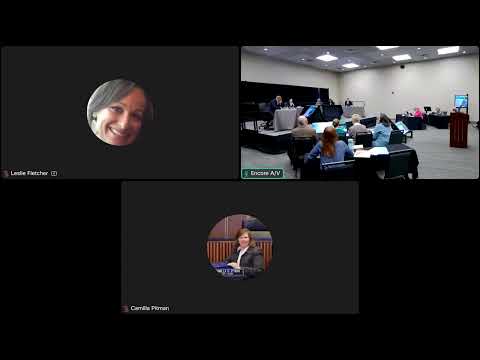
Transcript
Manual captions, redacted of names; they begin at the first open-session item and do not include the executive session. They are imperfect.
Transcript
Good evening, everyone. I'm not sure if my microphone is working. Okay, great. 1st on your agenda this evening is an update on our parks both our strategic plan and our master plan from our parks Recreation and tourism team. As you know, that they've been working on this project for close to a year now.
And this is a, a big step forward for us to get towards our accreditation, which we hope to receive in 2027. And this is a a great culmination of work that's been produced over the last year with our community and we'd like to be bringing it to you in December for final review and approval.
And today is your next update on where we are with this plan. So with that, I'm gonna turn it over to [name], who is our director of park Recreation and tourism to get us started and to introduce the team today. Well, good afternoon. As the slides are coming up, I do want to introduce.
[name] and [name] with agency. They're our consultants for the plan. As you know, PRT has had a lot of accomplishments over the last five years in large part due to the support of city council and the city manager's office. And today you'll hear more about our future plans for the department through the master plan.
We've been working on this plan for the last 18 months and agency or our consultants have done an incredible job not only engaging our community but also engaging the full PRT department to be a part of the plan. I also want to thank our PRT core team that was a part of the the planning process, [name], our project manager for it, and.
[names].
And now I'm gonna turn it over to [name] and [name] to run you through the full plan. Excellent. Well, thanks for taking the time today. We'll be sharing updates on both the master plan and strategic plan, and as we're getting the slides going.
We'll be sharing about how these two documents really work together to provide a clear roadmap for the next set of investments in Greenville's Park's Recreation and tourism. So the master plan really covers the what? What are those key investments that are key to keeping up the great mo momentum of the system today and the strategic plan?
Strategic plan is how you do what, how they do the work internally to make the master plan.
That's our executive session that needs to come off the screen.
I'm just the fun of a new location, you know? All.
That's right. A little glitch along the way.
Danvil making it over here. Oh, where did that come from? The convention center has done a great job in working with us and they may have made it for Matt, what did the, did you make the podium for us or did you get that from somewhere? Yeah.
That I don't know where it came from. I haven't seen it before. The 3rd floor. Okay ok yeah [name], who is our director of the Greenville Convention Center is here with us today and they've done a great job in trying to make this space. Thanks Matt.
What I would suggest is even though they don't have the PowerPoint in front of them, we do, and I would go ahead and get keep going so that we don't lose time today. Excellent. So we have these two documents that work together and both are really founded on a strong foundation of public input as well as staff input.
And so out of all these broad from pop up sessions to community workshops to stakeholder workshops, we heard really six key themes across the board. Desires for more ways to connect with nature, spaces for everyone, enhancing multimodal mobility, giving people more ways to build on the SRT and get around town, more recreation opportunities.
Is conserving green space and really continuing the trend of a great focus on quality and maintenance, so all this to make sure that greenville's parks recreation, and tourism are really staying as strong today, and into the future as well.
So out of all of this feedback, there are really three main guiding principles that are the anchors for both the master plan and the strategic plan. Those are 1st investing in people, principle number two, spaces that connect, and principle three leveling up experiences. And these three themes of people, spaces, and experiences tie really closely to prt's vision statement.
So there's really great alignment between how these plans really serve as that guiding roadmap for the coming years. And then how staff implement and make internal changes to implement the master planet. So [name] and I will be giving some of the highlights of what's in these two plans for both investing in people, spaces that connect and leveling up experiences.
So the 1st principle investing in people is really all about the people side of things. So how to expand physical accessibility, how to really think about centering, health, wellness, and social connections for everybody, and then also continuing the great work on safety across the board. It's really building an empowered skill.
Unresilient PRT team that works together collaboratively that really creates this one unified PRT culture. It also is around a culture that rewards innovation, continuing the great work that's already been happening in Greenville about doing, being innovative, being leaders in our profession, and then ensuring on.
Ongoing community engagement partnerships and.
So when it comes with planning, with people in mind, obviously continuing to keep up with growth is a key focus of both plans. Greenville is growing very quickly and a lot of that is due to all the great investments the city has made in parks, recreation and events over the years. More people visit Greenville, they love it, they want to move here, and so the population continues to grow. So as we.
Think about keeping up that momentum to ensure that as the city grows, that's an opportunity to leverage that growth to continue to invest in parks recreation and events.
Access for all. This is really building on the success of investments like Brooks playground, but continuing to grow opportunities for everyone to enjoy the Great health and recreation and wellness benefits of the park system. And on the strategic plan side, if you think about it, like you built in Unity park, which is a really different kind of park than you've had before.
It requires expanded team skills and cross di disciplinary collaboration, also integrating therapeutic recreation experience to ensure that disabled residents have equal access to facilities and programming, and then as part of that strengthening the staff training so that as staff need to acquire more skills.
We're providing them the training they need to do that.
So principle number two, spaces that connect, so we'll get an overview to this on the next slide. And the focus here is really on those physical spaces, all the green parts that that really are jewels in the network across the Greenville system. And so this really focuses on from neighborhood parks to destination parks and regional parks.
How to really keep up that momentum and continue to protect open space as the city grows. And on the strategic plan side, I know you are all aware of the need for a new maintenance facility, one that both has the capacity for staff work areas, storage, equipment storage, but also is out of a flood zone, right? So that it's not involved.
By the climate changes. Also making sure that the current standards for caring for the system are really kept up to speed as the system grows and the demands on staff continue to grow. And then continuing your great response to emergencies like you did for hurricane Helene.
And just continue to strengthen that as more opportunities present themselves for natural disasters.
So a big part of spaces that connects is really examining current access, when it comes to parks across Greenville. An analysis shows that the city is doing really well when it comes to really balancing where parks are and where people live today. Currently about half a residents live within a 10 min walk of a park and the whole city is within a 5 min drive. So a lot of cities would really.
They love to be doing as well as y'all are when it comes to parts access.
Real quick before you move on, what does that say about legacy park? I can only see is that presumably capacity. Is that capacity? Yes, you've done such a good job providing things and the parks are so great that more people are using them than maybe they were even designed for. So a big part of this plan is how do you continue to invest to make sure that there's a little bit of relief for some of these really well?
Love parks and continuing to plan ahead as the city grows.
You said half of the city is 10 min walk to a park? Correct. Okay. And is it shown at which part? Oh, ok. Are the bubbles? The darker areas are exactly. Oh the dark, like the purple Gotcha. Okay.
And so as we flip ahead to the next slide, this will show, really looking ahead to the future. We've started to overlay Greenville 2040 growth nodes on the city relative to park access. And what you can see is there's this big eastern cresent, which will be a big focus in the future. So as you think about places that are growing.
Continuing to invest in parks to make sure that there's great, opportunities to enjoy all the benefits that parks provide, not just for current residents but future residents as well. And I think, you know, the things that the city's already investing in, like Wheelsports Park are a great example of those kinds of investments that can provide recreation, they can have expanded trail opportunities at the same time. It's really things that, you know.
Really define the Greenville experience and this plan really looks at how do you keep that momentum up so that the city's as strong in in ten years as it's doing right now.
So, as part of that, as, as it grows, keeping the momentum on the quality of maintenance that you already are doing in the system. That is one of the signature points of your park system is the quality of those systems. So thinking about updating.
Management and replacement hands for major amenities that are gonna happen, right? You've got a bunch of new ones, but you have some older assets that need upgrades to it. Thinking about standards of practice for maintenance, not only for the parks themselves, but for the buildings. Green space preserves as you add more natural areas and other amenities in the system and then.
And again continuing to proactively manage your maintenance needs like what you're doing with the Park Avenue gym, the shelter replacements and rest green, West Greenville park. So continuing to do that work to keep the signature of your system alive in the future. And so another key area to keep up that moment.
Y'all have been doing a great job in investments in open space protection with more than 450 acres preserved in recent years. So this plan looks at how to keep that momentum going and how to continue building and supporting Greenville 2040s open space protection goals.
And within the strategic plan, as we've talked about, completing the study to evaluate new locations for a park maintenance facility or facilities that I know is challenging given the deliminated space that you have in the city, and then also strengthening your tree canopy through the urban forest comprehensive plan.
Green space preserve typology. I mean I think I know what that implies, but can you, can you just make sure each of us including me, understand what that's trying to say? Absolutely. Definitely, and we've got another slide that has a bit more detail on that coming up soon. Great perfect.
So leveling up experiences all about the special experiences that make the system great. So we'll look here at events, at recreation and community centers, at recreation programming, nature based experiences, including green space Preserve and SRT. And so with that, you know, as the city's growing, as the park system grows.
Maintaining the fiscal health that you have, looking at cost recovery opportunities, diversifying your revenue to strengthen the resources to manage that system. We did find that there was a need for a better coordination of marketing and program visibility. Again, particularly on the recreation side, that's a really critical component.
Own it so people understand what's available to them. And then, you know, as, as, the city manager mentioned, you're going through Capri accreditation for 2027, so not only getting that Capri accreditation but maintaining those standards moving forward.
So we'll start here with taking a look at events. Again, one of the many things that people love about living in Greenville are the great quality of events. With more than 650000 annual people enjoying those events, it was really the number one thing when it came to what people wanted to see, investment in, in some of our.
Surveys. And so here the need is really just to keep up that grow great momentum continuing to innovate refre refresh and rethinking events were needed, and really thinking about the opportunities that partnerships have and can continue to provide here really supplement.
James mentioned the need for really ongoing investments in community centers, really building on the great recent renovations of Nicholtown. Opportunities here to keep that momentum up with West Greenville Community Center, Juanita Butler and Park Avenue gym. And here investments can really continue that great work in the.
Town, but thinking about accessibility, connectivity, and flexibility in new spaces, and this will really give opportunities for even greater range of programming. Stem, arts center generational, really again being ways to bring community members together and create healthy ways for people to live.
The athletics program is really bursting at the scenes, and so both of these plans are really looking at too at how to grow that capacity to meet that high program demand. Here again, it's about making sure there's the right facilities to host these these programs and really expanding opportunities really in alignment with new desires.
So, more athletic opportunities, more nature based opportunities, more arts and culture programming as well. And on the strategic plan side again mentioning, as you expand your programming, make sure the public understands what's available, opportunities for them, and then particularly, look at your out of school time and camp program.
Is for staff recruitment strengthening and training for the staff. Critical youth.
Staff training is has changed a lot in our industry and so making sure staff are up to speed on contemporary working with you. And when we say out of school time, do you mean the summertime or just after anything after school, whether it's holidays, before and after school childcare summer programs, anything when the kids are not in school. Okay.
Love it. So here's where we'll talk a little bit more about growing nature experiences in that green space preserve. This is really the idea that Greenville offers so many great parks today, and this is really thinking about a new opportunity for a new park typology called a green space preserve.
So it might have light trails, it might have NO infrastructure for people as well, but it's really something that celebrates ecology. It's a way to protect tree canopy to really continue to keep the city green as Greenville grows. So this is an opportunity to really build on those 450 new acres of open space and really keep that momentum going with.
The Nature based lens to those investments. And with the system today that is almost 99 % developed, these nature spaces are really important and was one of the priorities from the public in in the statistically valid survey. And so because so much your system is developed park system.
Staff don't have that experience working in these kind of areas. So again, growing the staff's capacity to manage ecological environment obviously the SRT, one of the most beloved parts of the parts of the network. So here we really heard from community members desires to really keep this up to add more amenities.
Like more drinking fountains, more restrooms along certain stretches.
And then, you know, we know there's a real need to you to think about how does the city really take care of, and give high quality of the parts within the city itself. And, another piece relative to the love of the SRT was also, increasing staff capacity for safety, whether it's a park ranger program or a park ambassador program.
Programs, so people felt safer. There was someone staff on the trail managing things, also providing or refining their emergency management protocols along the trail when you think about, you know, an an extended trail, sometimes the ability to get on or off is a little more challenging. And then also, yeah.
Establishing some maintenance strategies around safety, maintenance eco ecological buffers between the trail and the other aspect land adjacent to it. Did y'all come with safety, we get a lot of inquiries about e bikes recently, and did y'all, do y'all have recommendations for that within the safety peak?
Piece. Okay. Yeah, for sure. I mean I have one, I love it, but you know on the trail it's a different, I would not recommend. Okay. Yeah, thank you. And so both of these documents have one shared implementation chapter because, you know, this.
This way they can really work together. So the, the, what are the investments and the how do they get done in the master plan and the strategic plan respectively? So both documents include this roadmap for implementation that looks at how to measure success, what are these key actionable outcomes coming out of both documents?
And both plans also have a shared quick win checklist, so what are those key things to focus on in the next two years to really build that momentum for implementing this plan and really see quick win opportunities and those things that are most aligned with public feedback, with key needs of the system and to really build on all the great work that y'all have already been doing.
Moving in recent years and to really keep the state of the PRT system strong.
Can you go back there just for one? Of course. Yeah, I think it's really. I love that. That one I might have asked that when we had our breakout session, but we Had these work it's hard to tell you. We had such a checklist in the GBL 2040 comp plan and you know, I think it, it helped us.
Stay accountable to the vision, so I really appreciate you including this and we'll digest it as we go along. I hear from my constituents I do hear it mostly from.
The pocket parks and we do an amazing job of upkeep. However, some of those growth months do are, are challenging. Absolutely. Yeah, one of the things I wanted to ask about is, I I know we we may not invest in lighting in there, but there's some places.
Where there's walking trails or whatever and they do go up under covered.
Stuff and so a lot of little bushes that want to jump out and it makes it difficult for the people who are riding or walking and even some little kids, there are some places that if we continue this look just to cut them back and if we're not adding light but to cut them back so people can walk through them fairly well. I.
Yes I'm in the area where most of the bushes are except her so because in in that area in their unity park, we have lots of over lots of over in terms of stuff, so. Yeah, we can look at that, I think that'll make it a little bit safer.
I was gonna say that's a very much a safety protocol to look at different aspects, do you need lighting? Do you need to trim things back? Do you need to open it up more? Those are, you know, all the variety, some other variety of safety protocols you can put. I do appreciate the way that we have written stop.
When some of the people come to places where cause drives because some of the drivers are talking. Yes. And then I'm like, oh, boy, we're getting ready to have a wreck over here and but you know, then all of a sudden we have been blessed, so if we can make sure those right at the roadways, most of the people will stand there and wait cause they don't trust them.
Now I I appreciate that.
So the s the words stop when it gets to the area. Most people will stop, so that's not a problem. But we want to be sure that nobody gets hurt. And, so that that's one of the things I cause I'm always there looking and driving all around the park, and so I'm gonna have to get myself together but I don't want.
See anybody get hurt?
Council member Dowe? I'll go after council member Gibson because I saw his hand 1st. Okay, well I got I got a few, so 1st off, this quick win checklist, was that made from issues that came up or is that just things that you guys think we should do? Yeah, go ahead, [name]. Public feedback, you know, what were the top issues for the community? Also input from the people.
Your T staff team city team as well, and just through best practices and analysis of the system. So just, just real quick question, are we, did we get feedback from the community that, that they're not happy with the events we have or? Oh, NO. Oh, NO NO NO.
Yeah, they're they're absolutely happy. One of the questions though is when you're doing programming or events is constantly updating them, keeping them tight. Are there some events that maybe we need to shift a little bit? So it's not that the events aren't are aren't well received they are, but it's about staying current, being innovative, staying ahead of the game.
Okay, so so so again though I mean it's not necessarily from a problem, it's just the things that we need to do to keep. Okay, gotcha, ok. Second thing is, on, and I don't know which slide it was, but on slide back you said that the, the.
The feedback on the community centers was 64.6. What does that mean? So that actually, that 64.8 % is the condition, so we did an assessment of every single community center from accessibility, infrastructure, modernization.
Access tech technology and there's one other category, I forget what it is, but every single community center was evaluated. The maximum score any center could receive was a hundred and that was the average score of all of the communities was 64.8 out of a hundred in terms of the condition of the centers. Okay, so let's break that down.
And to identify which of the ones are the ones that we really need to work on that we need a buttler or West Greenville? Yep, there are, I don't have them off the top of my head, but we have the collective.
Results that you saw on the slide, but then we have those breakdown of every single center as well and each category of every center. I don't have them off the top of my head. Yeah. Okay. All right, and last question on one of your earlier slides it was like you said diversify revenues? Yes.
What do you mean by that? So looking at opportunities, one of the things that we do is we have about 30 different revenue strategies, funding strategies that parking rec agencies that can look at. And so the that statement is, are there alternative revenue strategies maybe that you're already using?
To expand more on or revenue strategies you say you aren't using that you can look at expanding to diversify and have a broader revenue strategy for the department. Okay, just real quick off the top of your head, what's the biggest revenue strategy that you think we're not doing?
I don't know that there is a big one you're not doing, but I think that there are potentially are opportunities and I'll use the swamp private trail as an example. One of the opportunities is to use the, the land that is owned by the swamp rabbit trail for getting utility revenue strategies using that for utility lines or for.
That kind of thing that you can use as a revenue strategy.
Another opportunity potential, whether or not you want to do this and and a lot of these strategies are dependent on the values of the city of the community and that is do you want to put cell towers in parks and use that as a revenue strategy for parks? Those are just a couple examples. Okay. All right? And again, a lot of them, what we do is we evaluate them both.
On the feasibility given the community values but also the potential for revenue.
Okay, thank you. You're welcome. Council member Dowe? Excuse me, thank you. I think by the way, on the cell tower issue, I will say I've seen witness of that at the schools using their property to generate revenue with cell towers and I would be opposed to say Did, did you.
Did you review? This is great by the way, thank you and I I can't tell you, I I think council would agree we were receive a tremendous amount of compliments on our PRT team, so for all of you all tied to PRT, we hear it all the time. Big kudos for PRT staff.
Did y'all review our methodology and our criteria that we use for open space purchases when we, we consider purchasing and so the answer is yes, you reviewed it and should we expect changes or revisions coming to that?
And you don't, you can keep that kind of on the download but I'm glad you looked at it. We did look at it. It seems like a very sound methodology. We didn't have any In our look there was nothing that was missing. Okay. All right, good. Question for this might be for chief, [name] in the back. How is trail patrol?
Handled or designated within the city limits. In other words, and maybe y'all need to answer this I'm not sure. But when we talk about safety along the trail, just the portion that's in the city, you know, how do we, I see the, the, the sheriff's deputy on the motorcycle. I hadn't seen him in a long time, but.
You know, who owns that? Who owns that responsibility? It's a shared responsibility. You will see them and you'll see we Rod argue bikes. I mean, I think it your exempt, right? I mean, if there was issue the golf. Are they in uniform? Everybody's in uniform? Okay.
Alright. Ok, on the and this sort of ties I think to what [name] was getting at maybe on events, there were only so many weekends in the year. We can't change that. There are only so many weekends in the ideal weather. We can't change that, but I wonder if you reviewed our events schedule and was Visit Greenville consulted any because.
We have some that are, you know, we'd love to have.
Events that support our tourism interest industry rather than duplicating and and the, you know, when we have two big events on the same weekend and we don't have enough hotel rooms, but the next weekend we're vacant. So is that strategic but but to be fair, a lot of our events as well, we've always had it on that weekend.
Always been on that day. Are we pushing the envelope to say And that's part of the different. That's part of the refinement that we're talking about is really looking at that schedule, and just because you've always done something does it still have the appeal that it did? Is there an opportunity to rejuggle the schedules a little bit to maximize?
Those events, that's what We're and I want to think about our hotel partners. That's right. And they are very keenly interested in bookings.
Across ideally. Okay, absolutely. All right, thank you. Other questions from Mayor and council on this item? Seeing none? Sorry. Great job. That looks great. We'll take that very much. Thank you. Thank you. So thank you very much and.
This will be before you all for formal adoption in the very near future before the end of the year. So either I'm not sure if it's on the December December so it will be it's your December 14 meeting. So thank you all very much. If you have any final questions or comments concerning anything that was discussed today, please send them to my office and to our PRT team. We'll get a draft.
Absolutely. Yes. Yes. We'll try to get that out to you this week so that you have time to read it before the meeting on the 14 December. All right. Thank you all very much. Thank you all. Thank you. Thanks, guys.
Okay, our second item on the work session this afternoon concerns residential driveways, and this is just an item that [name] and I constantly get communication about. Y'all are all shaking your head yes, because we do, and so.
Even though, so whenever we get a lot of communication about an item, we think it's good to bring it to council to see, to A, let you know about it, let you know that we're working on it, what we're thinking about and to get your feedback, even though we are not planning a new code update for 48 months, if this is a one item or one off item that council thinks needs to be addressed pre before.
The next code update or should be included in the next code update. That is information that we're trying to receive from you here today. So with that, I'll turn it over to [name] and we'll go through this item to see your feedback on residential driveways. [name]. Thank you, [name]. Good afternoon, everybody. So let's see if we can go ahead to the next slide.
I'm gonna talk some about just our general parking requirements and standards that are in the Greenville development code. That's the zoning code that applies to a broad range of development projects in the city and including our residential neighborhoods. So many of these standards I will say were included in the code.
Code and we're kind of a carryover from the previous single family residential infill standards in our land management ordinance. So a lot of these concepts have been around in Greenville for 1015 years, probably even longer than that. So these were not necessarily new concepts with the development code in 2023, but.
But the goal is really to minimize the impact of motor vehicle dominated areas in our neighborhoods. The code includes parking setbacks for nearly every zoning district and all required parking must be located behind that parking setback, which is typically 30 to 40 ft from that front property line. So looking at this image here.
Your two required spaces for a single family home have to be located behind that parking setback. Now obviously your driveway continues out to the street, but the maximum width within that parking setback is 12 ft. So, next slide please.
The parking setbacks are included on our district pages in the code, so you have an example here where it's highlighted in yellow, and they say how far parking must be from the front street, the side street, as well as any alleys. The minimum parking setback in RHBC and D is 30 ft, and currently in our.
Rha it is set back at 40 ft. The goal here again is to push parking so that is either to the side or rear of a house. This way you don't see oversized driveways leading to a house where there's a wide garage and that being the main architectural feature that you see. This is meant to help promote quality home design in Greenville and.
To provide green space in front yards.
Next slide. So some situations where parking is directed to the side or rear the house is simply not feasible, you know, the house might already basically be maxed out to the setback lines. So in some situations that parking encouragement into the front of the power.
This and beyond the parking setback is really the only option.
We have some administrative relief that we can grant, which is 10 %, so in a 30 ft parking setback situation, that buys you 3 ft, doesn't always help a whole lot. You can request a greater reduction by variance, and remember, keep in mind that some of those variance criteria can be hard to meet, so we really look for.
For unique factors such as steep topography that might be behind the rear of a house.
If someone has landscaping or, you know, what have you, and they just don't want to take that area out to meet the parking setback, that's not usually a justifiable, a justifiable criteria for a variance. So that's something that our BCA looks at with each application request. So we haven't had a whole lot of variance requests on driveways move forward.
Next slide, please.
Vehicle access. So these standards are intended to minimize conflicts with vehicles and non vehicle users. So like people walking around, pushing strollers, bikes, what have you, the code actually has a clear hierarchy for where driveways should connect with the road. So if there's an.
That's where we typically look for the driveway to connect. If you are on a side street or on AC and have a corner lot, then we prefer the driveway to go along that side street. And then lastly, if you're just on an interior a lot on a block, that's the only option a lot of times is to put your driveway in front of the house and then.
The situations especially on new construction, we look for that driveway location to go around the side of the house.
Hey [name]. When you're saying the, when there's not a variance granted, is that the front parking option that was on there? Sometimes it is the only option. Okay, so got you. Typically, we only allow one driveway for lots in the RH and.
RN districts. The ma maximum width used to be 10 ft, but with the recent code update, we increased it to 12 ft.
So that's the maximum width, like I mentioned, that can be within the parking setback. Once you're past the parking setback, the driveway can fan out and be wider. We also require driveways to be either a paved or a hard surface. Gravel is not permitted, but we do allow for the ribbon driveways that.
Have the browser natural area in between the two strips and we've got standards in the code for that.
Circular driveways, those used to be kind of a tricky under the previous LMO, they are now permitted by right as long as engineering agrees to it. We might look for some and introduce some more standards for circular driveways as a part of the next code update anyways. We get a lot of questions about these. If I'm already.
Eating my parking, you know, behind the setback. Am I still entitled to a circular driveway? We just want to clear some of that up. So probably not talk about.
Circular driveways has much snife, but that's something that we have on our list to review. Yes ma'am. Yeah, I want to ask concerning that because it's a problem in my, one of my districts where people were told that they could not do a circular driveway. The next door, there was two.
And up the street, all I'm saying is that if we're going to make some changes or do something we're gonna allow some people to have a circular driveway and others not to have one, we need to be very clear about that. We agree. Yep. Okay. And so that was that was a real serious problem until I asked the question. Well I shouldn't have to ask questions.
Yeah, etc. But I asked the question, so they got the circular driveway and it's much better and safer for them. And pete, I think that do families tend to come forward with something like that? I I know I live in an area where your driveway is one car wide and they're very limited options.
People are seeking, this might be true in, in North Main too. Circular driveways when a child, e.g., becomes a driver or another adding to their fleet of cars. And it's really a matter of adding more parking area as well as convenience. Are we seeing that? I mean, you could have been in the house for, you know, 16 years? Sure, yeah.
And that's one of the scenarios we'll go through. Yeah, later in the UCS loosening on the circular drive down the road. That's one option. We just need more if, if that solution is a circular driveway, we want to have some more criteria there. We don't The code just doesn't have a whole lot of parameters around circular driveways other than, you know, within.
This parking setback, it can't be wider than 12 ft. No.
For garage design, we have standards for garages, interior parking spaces must locate or behind the parking setback as well. Part of that is intended to push the garage so that it is behind the front facade of the building, which is a requirement anyways, so the garage.
Garage door has to be at least 10 ft behind the front facade of a building and it cannot be greater than 40 % of the front of that house. Sometimes that is a design challenge as well, especially like in our RHD districts where you may have in the lots there can be quite a bit narrower and.
If you've got even a one car driveway that can really be pushing up against that 40 per 40 % limit.
Other challenges come about with townhome developments, but a lot of times we look for those to be alley fed when possible, so we typically push for rear loaded garages on a lot of those types of projects. Okay.
Some of the common quest requests that we receive is expanding driveways to accommodate the needs of large or growing families. So right now our code requires two parking spaces per basically single family detached tone. And per the code, those are suppos.
Must be located behind and outside the parking setback. You can still park on that portion of the driveway within the parking setback, but remember that tapers down to 12 ft, and so if the home and the garage and your accessory buildings were constructed to really meet the code but not exceed it in any way, that's where we get a.
A lot of requests for, hey, I've got, you know, kids that are about to start driving situations like that. So we do get a lot of requests for widening a driveway, adding a front parking pad. And so those are some of the common requests that we received that right now we don't have a good solution for under the code.
Expanding parking areas greater than 1000 sq ft especially on larger lots. So right now the code limits your parking areas to a thousand square feet, even if it's located behind the house. We've got much larger houses or lots throughout the city where we maybe able to look at a scaled version of.
That approach instead of having just a uniform thousand foot cap.
And that's per one residence. Yes. Okay. Yep. And this is pervious and impervious, it doesn't matter. It would be impervious. Yep. So, and the driveway has to be hard surface concrete of some sort, so we wouldn't allow for like a gravel or other solution.
For something like this, so.
We're we're looking for some more standards provisions around the standards, so. And we do work with the neighborhoods because there's a lot of areas that don't have that in various areas or may not even like this pictures, they park on a grand, I'm just saying that's.
But the, but the dryway, if it was wider, they could get to it but it's not. So what do we, what are we doing now? Are we we're not finding people we're working with them? So under the current code, this is technically a parking violation and a residential district and we're.
We get numerous complaints from neighbors when someone is parking in their yard. And so that can result in a zoning violation and we've had to chase those down before. Okay, but the zoning violation.
What happens is there a fine or you just ask the people to just change it or what? They would have to begin parking in the driver. A lot of these situations are for people that don't want to play card Tetras every time someone has to leave, and so they park to the side, the zoning code would require them.
To park in the driveway.
Okay. Or on street. Or on the street if the street. So, yeah. So, another common request is to expand the driveway or out of parking area within the parking setback to avoid maybe some mature trees or land.
Escaping areas that are located to the side or the rear of the house. So where the code wants the driveway to go, there may already be some significant investment and improvements that have been done in those areas. That's also very common.
And then we get a lot of situations where driveway contractors will come and report basically a driveway in its exact configuration, but, if that current configuration is non compliant with today's code, then that replace the driveway.
It's technically in violation of the development code, so, deal with that on a fairly regular basis. But ma'am. I think I think we're almost to unless it's a question on that, I'm just trying to make sure [name] gets through the end. It was, it was a question on that. Yes. Okay, go ahead.
Go ahead [name]. Okay. So a couple of solutions that we're looking at, and these don't necessarily tonight we don't have a solution for every scenario that I just walked through, but these are a couple of points that we've already identified that we might explore as a part of a 40 month.
48 month code update, so in summer of 2027, and those would be allowing for 20 ft wide driveways on lots that are 80 ft in width or greater.
So currently all those driveways must taper down to a tw to 12 ft within the parking setback, but in situations where you may have a wider lot, of having a, basically a two car driveway might be an acceptable compromise. Reducing the RHA parking setback from 40 ft to.
To 30 ft, so all the other RH districts are at a 30 ft parking setback. This would place the RHA in alignment with that.
So that's something that could be considered. Allowing for greater administrative flexibility to preserve heritage trees. You just heard a presentation on the importance of open space and tree canopies. So this is something that we could always look at. If there's a mechanism to do that at an administrative level, that might be a good path forward.
And then, like I mentioned, providing clarity on circular driveways, we just really need some more language in that part of the development code. And then other potential solutions that we're very happy to talk to you about in the coming weeks and months leading up to our next code update.
Alright, thank you very much, [name]. Okay council member DeWorken and then council Member Belge and then council member Brasington. Yeah, I must have I I bet I missed this, but, so we're saying that if I've got an existing site driveway and for some reason it's crumbled, a truck drove on or something.
And I want to replace that driveway with the same material in the same size, but it has been non conforming. I'm now not allowed to do that. It can remain in its current configuration, but if you want to report it and have the entire thing replaced, we would look for that to move.
Today's code standards. Okay, so I'm not crazy about that, but, do we have a manager? Do we have a mechanism by which if someone does that, that, we can waive.
The required But I guess what I'm trying to get at is I got a driveway, I've been in this house for 20 years, I got a truck that backed up into my driveway, cracked the driveway, I now have to replace the driveway.
And, could have been my truck. Ru, and now I gotta replace the driveway, but now to configure to the new code, it would perhaps be a lot more expensive, and I think that that's just a concern that I have, but maybe that's just a one off and that doesn't happen. It does happen, not, not often, but it does and I.
I think that one of the things we were, we were hoping to get out of this presentation tonight was exactly that kind of feedback and whether you, whether there was a will of this body to provide more clarity on how to address circumstances like that because we do encounter that. Yeah, I mean, there's certainly a will from one of these members to say if you've got an existing driveway and you want to.
Yeah. That's right. Thank you. That's right. And we'd like to, and we I think that we can do that. We just need to make sure our code specifies that. And so right now there's it's not clearly stated. And so that's why we get ourselves into these conversations about what can and can't be done.
For the administrative relief I think one of the things that we also want is a little bit greater administrative relief so that we can deal with things on site like trees because we also get a lot of times where someone wants to make a change to the driveway or do something different with the driveway that's not in 100 % conformance with the code, but they're doing it because they're trying to preserve a heritage tree. And we want to.
Be able to also work with people on things like that because we don't, we don't necessarily want someone to cut down a heritage tree just to meet a requirement for a driveway if we can work with them on that. And that's where sometimes some of the things like the circular driveways come into play that council member Flemming was mentioning earlier in the conversation. Yes, I think next was council Member Belge and then council member Brasington.
And council member Dowe council Member Belge? Yeah, I mean, I'd be concerned with the 1st one, just.
You know, having too much pervious service lost, 20 " wide, I mean, I like the tapering down to twelve and then with the reducing RHA, that's that seems perfectly reasonable. The 3rd one, the administrative flexibility for hair to treat. Are we saying that, is there a required length, right, for a driveway?
So instead, would you make the flexibility so that could be shorter but to accommodate as long as wider, as long as it could accommodate a vehicle that was long enough to accommodate a vehicle, but it may need to be wider so you would do a wider shorter driveway for maybe two vehicles instead of doing a long thin driveway that would accommodate the two vehicles side by side Especially if there was an opportunity to save trees in the.
I've heard this a lot about the length requirement really getting the way of some improvements, whether that's for the house or someone trying to renovate a home, things like that. But that 1st one kind of gives me some pause just because the the loss of pervious service, and I saw that we have paved only, we don't allow gravel or other impervious. Is that.
But I mean, I'm assuming those for some good reasons, but you know, I think about storm water, so is there a reason we only do straight paid, like we don't allow I know I've seen, so now they have pervious concrete. Have we looked at? I think that we have a maintenance issue with gravel where it ends up into the street and the city ends up maintaining.
Training it. I think we could look at some other alternatives of pavement such as the papers or some of the other options where we don't end up with a long term maintenance issue for the city. And so, but I I think to just go away completely from not having a hard surface is not something that we would recommend, but I think there's alternatives that we could review. Yeah.
Some that looked just like concrete, but it's pretty wild and previous. Okay, well thank you then. Thank you very much. Council member raising time. Thank you, I know we're short on time, so just some quick hits mainly reaction here. 1st, the question, these five bullet points [name], in your best estimation, if they were approved, if they were put in play, would they clear the deck on the frequent.
Only received concerns. I mean does this cover the base? On some of them, there's other issues we need to unpack, but this takes a dent, but there's other things we're not receiving info on tonight. Yes, ok. Have, have you looked at what I would just call a scale? I mean I read this at face value 20 ft wide driveways on any lot over 80, but you know, if it's a hundred and 20.
Foot lot or something like that? Has there been thought about 16 ft 2024 versus just twelve to 20? Something to consider.
And then, council member Belge's comments about previous versus Impurbus kind of got in my mind too. I, I presume the 3rd bullet point, all that would require is some text edition that states administrative flexibility and control and makes me wonder in certain situations especially on large lots where the parking is desired in the back, where it's less likely.
If a runoff of gravel and stuff to get in the street, maybe there's some sort of administrative discretion there, you know, just a thought on that. I think that's it. Thank you council member. Council member Dao. Yeah, real quick, just a 1st reaction of anything that allows parking in front of the house.
Yeah, that's something we've worked really hard to avoid. We had a lot of trouble that when we were in the Airbnb debate and which this is not that debate, but parking in front of houses leaves me south a happy in terms of a general adding that.
Saving heritage trees with an administrative waiver. I mean that's a huge priority of the city and that's a NO brainer to me. If you can adapt the driveway, make a, make an exception to preserve a heritage tree tree, that would be an easy yes. I am not particularly.
Warm to yielding on our purvious surface requirements and the ratios or the percentage required on a lot. That's very important for our storm motor control in the city. You know, to counselor Belgie's point, there are materials expensive. Those those those pervious concrete things are very expensive. We do allow the river rock center driveway.
Gravel.
It is a maintenance issue and again all that ends up in our storm order system, so I don't really see that as a good thing to kind of expand on allowing. So those are just my thoughts on this. Thank you. Thank you very much. We will, our plan right now is that we will continue to work on this and it will be included in your.
Yes council member Belge. I'm sorry, I was just gonna say also shared driveway, are we coming back to that probably back with this too? Or not part of this, but in the future? In the future yes. So we will include this in your 48 month code update unless I'm hearing any reason to do a one off, which I'm not seeing a desire for that right now, but this will be included in your 48 month code update, and we welcome.
Any feedback that you have between now and when we start working on that in the spring as to other items that you'd like us to consider as part of a potential solution to this issue? Alright, with that mr. Mayor, that's all we have this evening. Thank you sir. That's it. We've, in the end on parking. Does council want to break.
No. We got a couple minutes? Yes or NO? No? Okay. You Okay well we got 2 min anyway, so that's your point. Three, why not? Okay, thank you. Be back in 2 min. Oh, I know. You're ready for it.
So thank you.